I have been carrying three stories around with me. They do not seem to belong together.
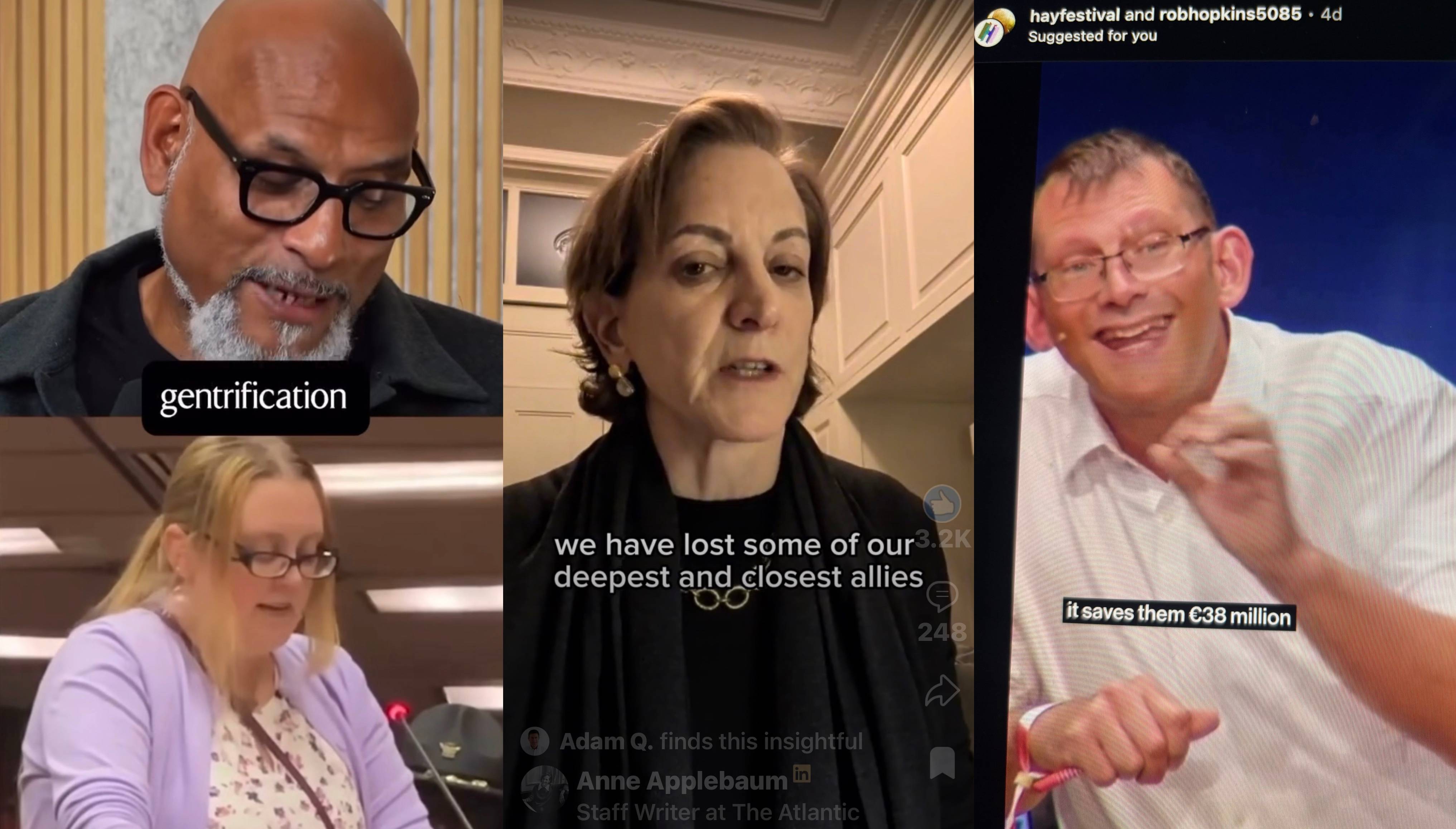
One is about a woman in Springfield, Ohio who stood up at a community meeting and decided to “complain” about Haitian immigrants.
One is about standing in Utrecht at eight in the morning while forty thousand bicycles roll silently into a city that chose health over horsepower.
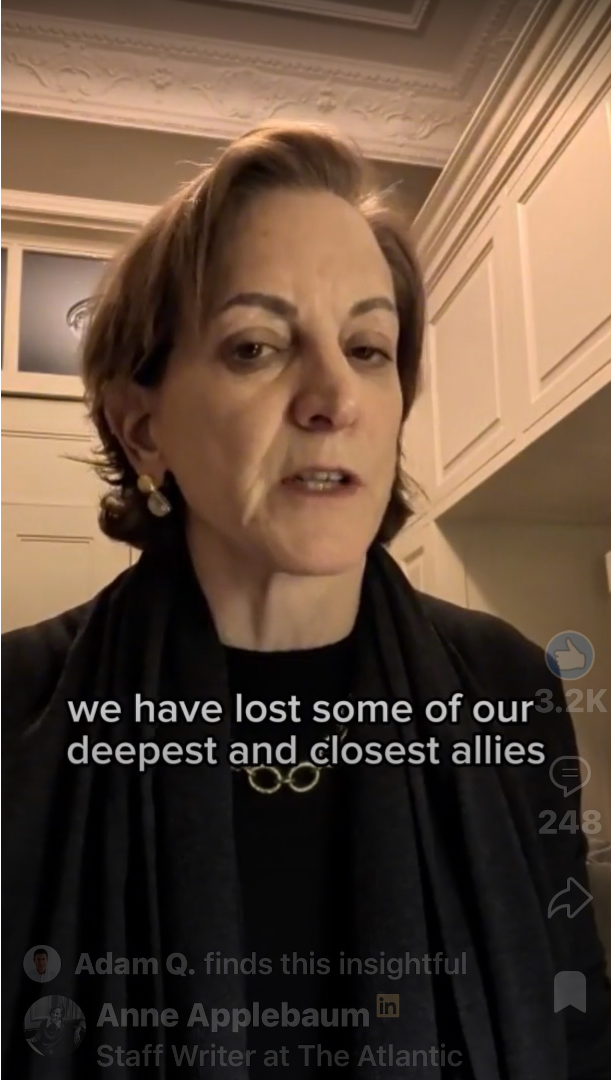
One is about sitting in Copenhagen and hearing that Danish officials have quietly run scenarios about what they would do if the United States ever became unpredictable enough to threaten Greenland.
A satirical joke.
A bicycle lane.
A war plan.
And yet . . . they feel like the same story.
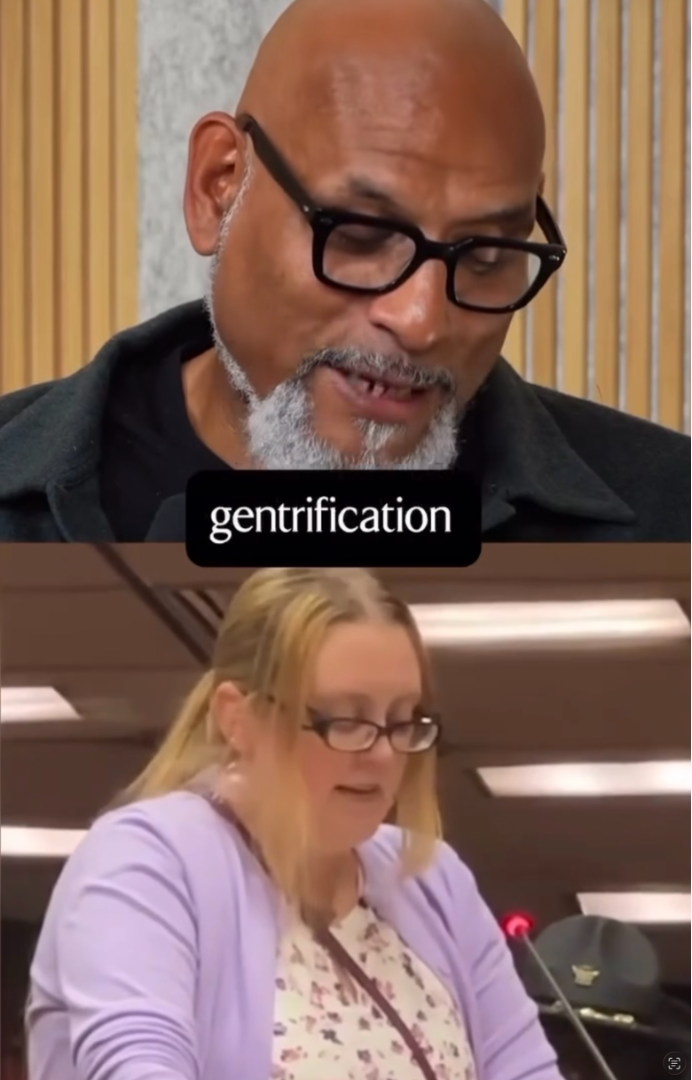
In Springfield, the woman listed every supposed outrage:
- Immigrants filling jobs locals would not take . . .
- Immigrants raising everyone’s average wages . . .
- Immigrants paying taxes . . .
- Immigrants buying condemned houses and restoring them . . .
- Immigrants pushing the city’s real estate valuation above one billion dollars for the first time . . .
- Immigrants opening restaurants . . .
- Immigrants expanding the tax-base to stabilize the community
Then she said she suffered from “main character syndrome” . . . so naturally she “demanded” the $655 per month in assistance asylum seekers receive while waiting legally for work permits.
The room laughed because everyone could hear the inversion.
The threat was fixing houses.
The outrage was rebuilding a town.
The satire worked because something else was true too:
- Some people genuinely feel displaced when someone else’s contribution becomes visible . . . because the story is no longer “centered” on them
That feeling is real. Even if the arithmetic contradicts it.
And that is where I have started to worry.
In Utrecht, the arithmetic is simple:
- The Dutch government invests roughly half a billion euros per year in bicycling infrastructure.
- Real infrastructure.
- Underground parking garages for thousands of bicycles.
- Integrated transit and Repair services.
Health economists estimate that for every €1 invested, then the state saves multiples of that in national healthcare costs.
You can see it in the morning air: fewer polluting engines and micro-plastics AND more healthy hearts + lungs.
Yet in many places, bicycle lanes are framed as indulgence . . . as inconvenience . . . as culture war.
The math is clear. Too often, the Business-as-Usual narrative resists it.

In Copenhagen, the math is less comforting:
- Global debt has reached historic levels.
- Defence spending is rising.
- AI investment is accelerating.
- Sovereign borrowing expands to support security and technological positioning.
All understandable.
And yet trust has become fragile.
When allies begin quietly recalculating risk, something more than budgets has shifted.
It does not happen overnight. It happens through accumulated signals. Through tone. Through posture. Through the subtle erosion of predictability.
Trust is not declared. It is built. And it is lost quietly.
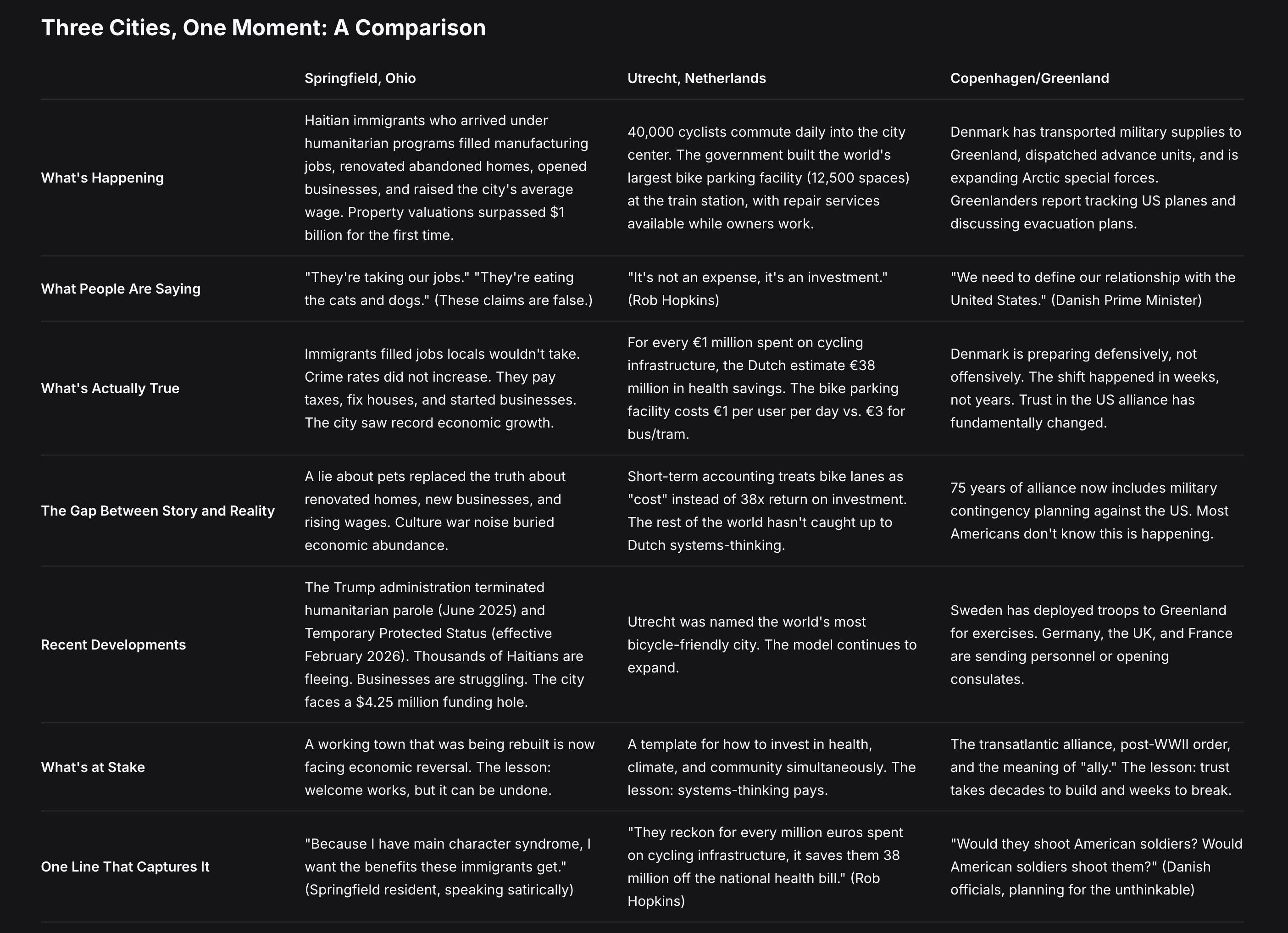
Springfield. Utrecht. Copenhagen.
In each place, something constructive is happening:
- Communities revitalizing . . .
- Infrastructure compounding health . . .
- Nations reassessing security . . .
Question: what do you see happening in each place? What is the dominant public narrative drifting toward?
Immigrant as invader?
Bike as nuisance?
Ally as liability?
Are we too often misreading signals?
Are we too often mistaking investment for invasion?
I do not say this from a pedestal. I catch it in myself.
The reflex to center my comfort around “lived experience” . . .
The reflex to react before reflecting and calculating . . .
The reflex to prefer a simple story over a complex system . . .
“Main Character Syndrome” is not just a meme. It is a temptation.
And at scale, it becomes policy.
What quiet disciplines should we strive to cultivate?
Look twice.
Ask what the numbers actually say?
Ask who is truly creating value?
Ask whether fear is outrunning evidence?
The future is not getting smaller. The future is getting more interconnected, more leveraged, more sensitive to miscalculation.
That requires maturity.
The future requires decency . . . not as sentiment but as proportion. As the willingness to acknowledge contribution. As the restraint not to weaponize narrative when the math says otherwise.
Because the real danger is not that the world is changing.
The real danger is that we will keep misreading the change.
The real danger is that we build policy on misperception.
History rarely collapses from lack of intelligence.
It collapses from lack of proportion.
The woman in Springfield knew it. She told the truth by pretending to agree with the lie.
Forty thousand bicycles in a Dutch morning know it. Quietly.
Danish generals, running scenarios they wish they did not have to run, know it too.
The world is not shrinking.
But our capacity to interpret it honestly is under strain.
That is the work.
Not shouting louder.
Seeing clearer.
And having the courage to say what the arithmetic already shows.
– – –
Further Reading:
- Transcript from Clark County, Ohio curated review of masterclass in satire by one resident: The video itself says a masterclass in such. And I actually think it’s cleverer than that because the audience she’s talking to, I don’t know, would have got the satire. But the way she listed off the trope of stereotypes around immigrants, and at every stage showed the positive impact. Wonderful. I love this woman. I was born in Springfield, and I’ve lived here most of my life. I can’t believe these Haitian immigrants would come here and fill jobs that local Springfield residents would not do. This is it. Most people don’t realize that these immigrants from Haiti raised the average city wage for both Springfield and Clark County. They’re paying income tax to the city that the city desperately needs for services. Immigrants, including undocumented workers in the United States, when it’s really good data, pay tax. They’re making some of the local losers look bad by their example. It’s unbelievable. The Haitian immigrants are working overtime to save up money to buy up all the dilapidated, condemned, and boarded up homes in Springfield, then fixing those houses up to make them liveable. There it is, gentrification of houses. This is raising property values. Raising property values across the city and county, to the point where the valuation of all real estate in the city surpassed $1 billion last year for the first time ever. This in turn increases the property taxes paid to Clark County for those homes that are now no longer boarded-up nuisances. I can’t believe they’re helping to fund our government and beautify our neighborhoods. These Haitian immigrants are now spending money in our community to start new restaurants and retail spaces that keep opening up across the city. What absolute madness. Now we have new businesses in town generating more tax revenue for our city and county. I have a good paying job with great benefits, but because I have “main character syndrome” . . . I want the exorbitant benefits that some of these Haitian immigrants get. And the rest of the audience just laughing, brilliant. $292 per SNAP a.k.a. food stamps, and $363 in cash per month for a single adult. Everyone knows that $655 per month lets you live like a millionaire in Springfield. I don’t need it. But I want it before anyone else, because why should we help folks who have legally come to our country, but they have to wait for their work permit so they don’t starve, feeding the hungry in our community? I love this video.
- Transcript from Rob Hopkins at the Hay Festival: 40,000 bicycles cycle into the center of Utrecht every morning. If you want to get a sense of what a low carbon future would be like, just go and sit by the train station in Utrecht at 8 o’clock in the morning. It’s mind blowing. And the reason that happens is because the Dutch government, every year, invests half a billion euros in building really, really good cycling infrastructure, not the rubbish we see quite quite a few places here. It’s like all these underground car parks, they don’t use them for cars anymore. They fill them with bikes. It’s free. You leave your bike there. There are people who’ll fix your bike during the day while you’re at work. It’s just this whole amazing infrastructure. They reckon that for every million euros, they spend building that cycling infrastructure, it saves them 38 million off the National Health Bill. So it’s not an expense, it’s not a cost, it’s the investment. We can take that same way of thinking, apply it to how we feed our kids, to how we build houses. All that stuff. At the moment, we just we don’t think in systems. We break everything down into little, little pieces. If we think joined up, it’s absolutely possible that we could create the most extraordinary future.
- Transcript from Anne Applebaum after her visit to Copenhagen immediately following her presentation at the Munich Security Conference: We have lost some of our deepest and closest allies over the last year, in a way that I don’t think has really been brought home. I’ve just I’ve just come back from Denmark. I spent a few days in Copenhagen after the Munich Security Conference. My conclusion after both places is that I don’t think Americans realize what has happened in Europe in the last six weeks. Only a few weeks ago, the Danes were preparing for a possible American invasion of Greenland: mentally preparing, militarily preparing, thinking about what they would do. Would they shoot American soldiers? Would American soldiers shoot them? What would the consequences be for the economy? Denmark’s allies were thinking about the same thing . . . during different scenarios, what if we’re at war with the United States? What if Denmark is at war with the United States? I think that the European determination to break away from the U.S. is understanding now this deep understanding that the U.S. is a danger, that even economic integration with the U.S. is potentially dangerous, that Europe needs its own tech industry and industry. I think has advanced really quite rapidly.