Should “safety” be something that must be argued for . . . or should “safety” be simply there? There are moments when a country is asked a difficult question . . . and this time, the question has been formalized.
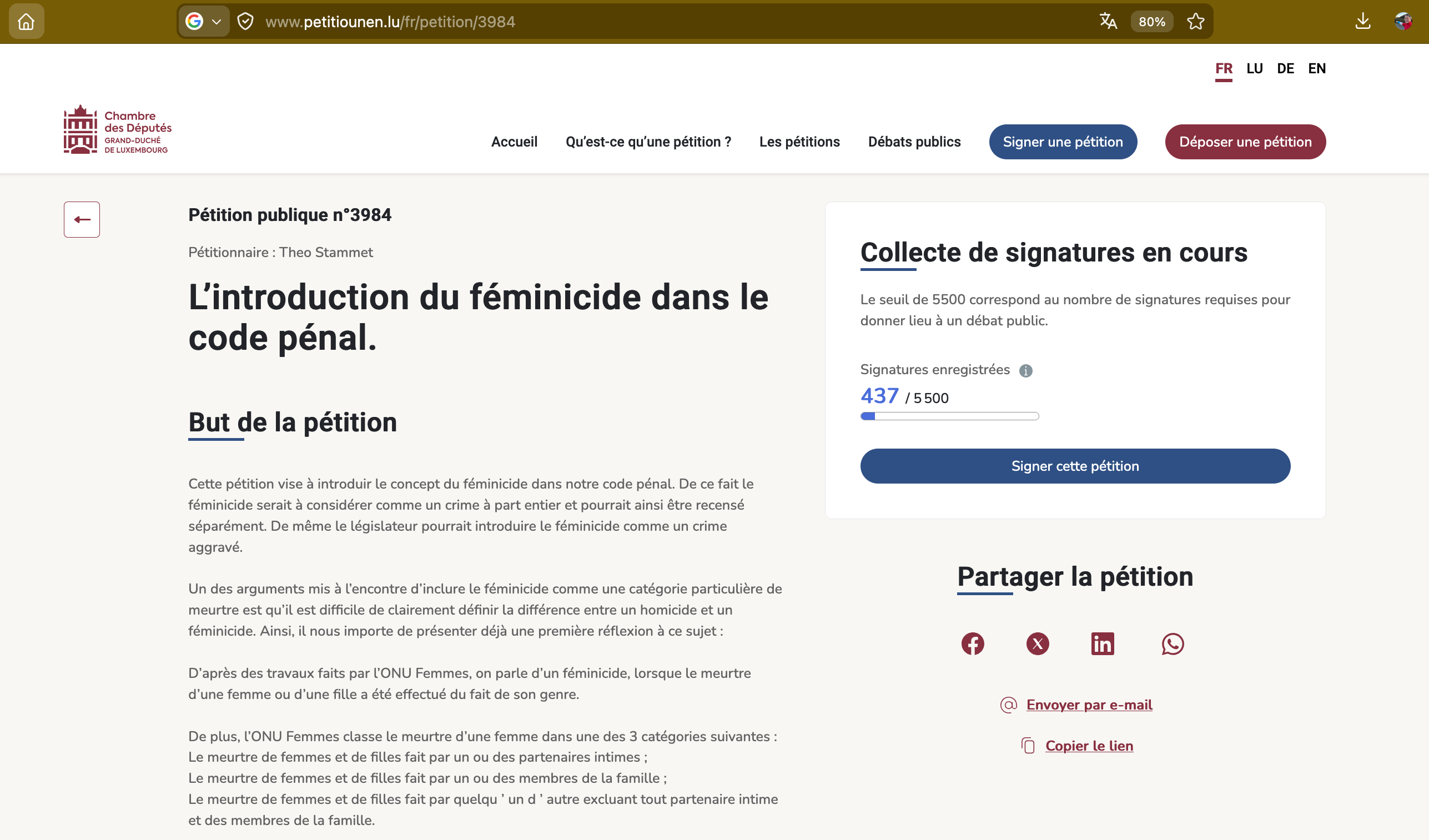
Public Petition n°3984 https://www.petitiounen.lu/fr/petition/3984 is collecting signatures on the Chamber of Deputies Luxembourg website.
Public Petition n°3984 asks, quietly and unambiguously, whether Luxembourg is prepared to name something we have so far avoided naming: Femicide.
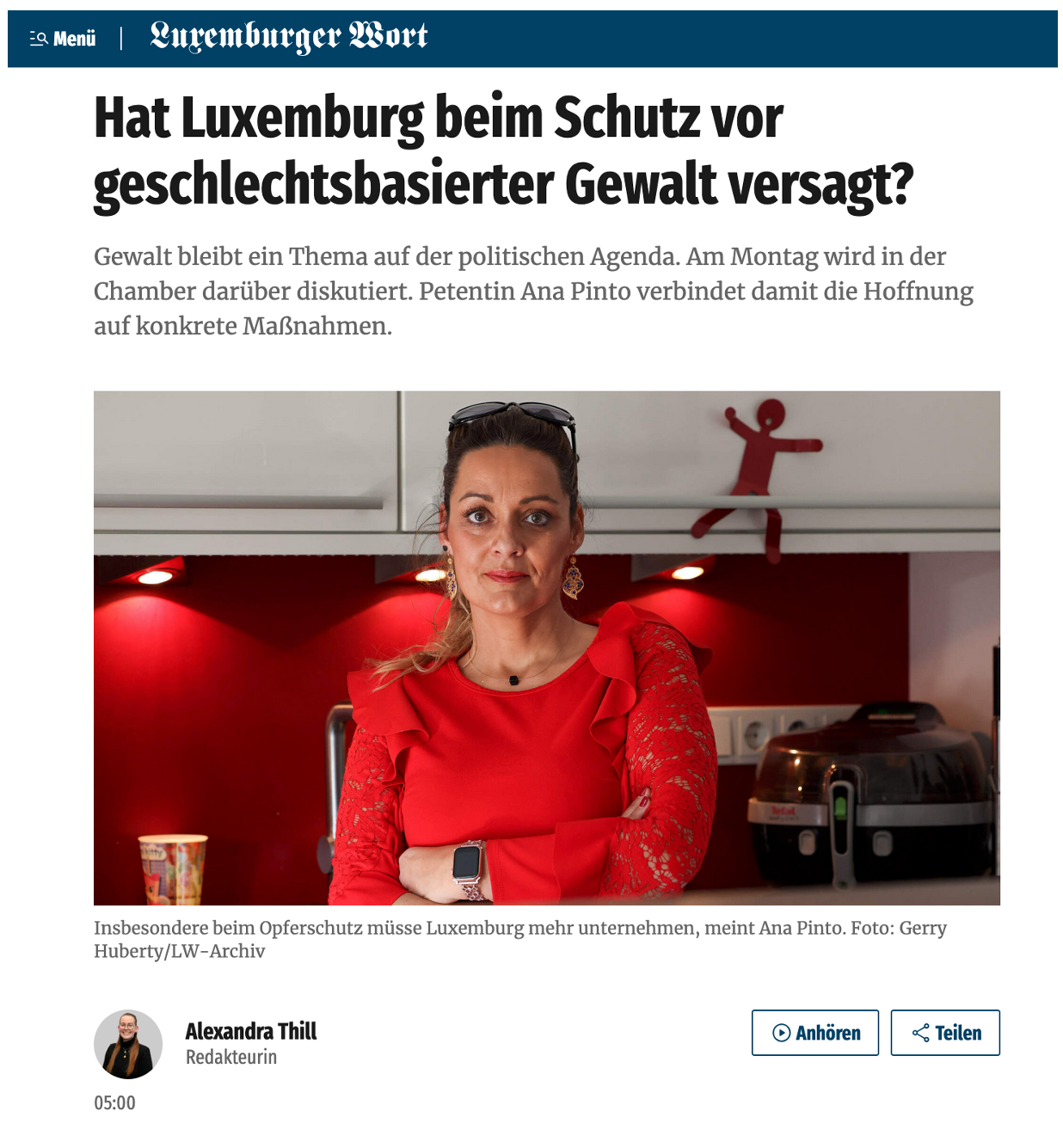
In today’s Luxemburger Wort, Ana Pinto gives voice to the same unease from another angle. When asked whether Luxembourg has failed in protecting women from gender-based violence, she pauses at the word “failure” . . . but not at the reality behind it:
- why are there gaps in Victim Protection?
- why is there no clear legal recognition of femicide?
- where are the statistics that make the femicide visible?
- why the institutional frictions that weaken trust and solidarity?
There is a growing impatience with promises that do not yet translate into protection. The petition gives this impatience a legal form.
The petition does something deceptively simple: it proposes that the killing of a woman because she is a woman should be named as such in the penal code. Not as an abstract aggravating circumstance. Not as an implication. But as a category that can be counted, studied, prevented, and judged with clarity.
This is not merely semantic . . . because what is not named . . . is rarely measured. What is not measured . . . is rarely prioritized. What is not prioritized . . . remains structurally invisible.
The petition draws on definitions from UN Women: it outlines criteria. It situates Luxembourg within a broader global reality where tens of thousands of women are killed each year, often by those closest to them. It points to rising domestic violence interventions. It highlights something that should give any policymaker pause:
Luxembourg cannot even fully enter the statistical conversation . . . because the category itself does not exist in its legal framework.
This is not a failure of data.
It is a failure of definition, and definition, in law, is design.
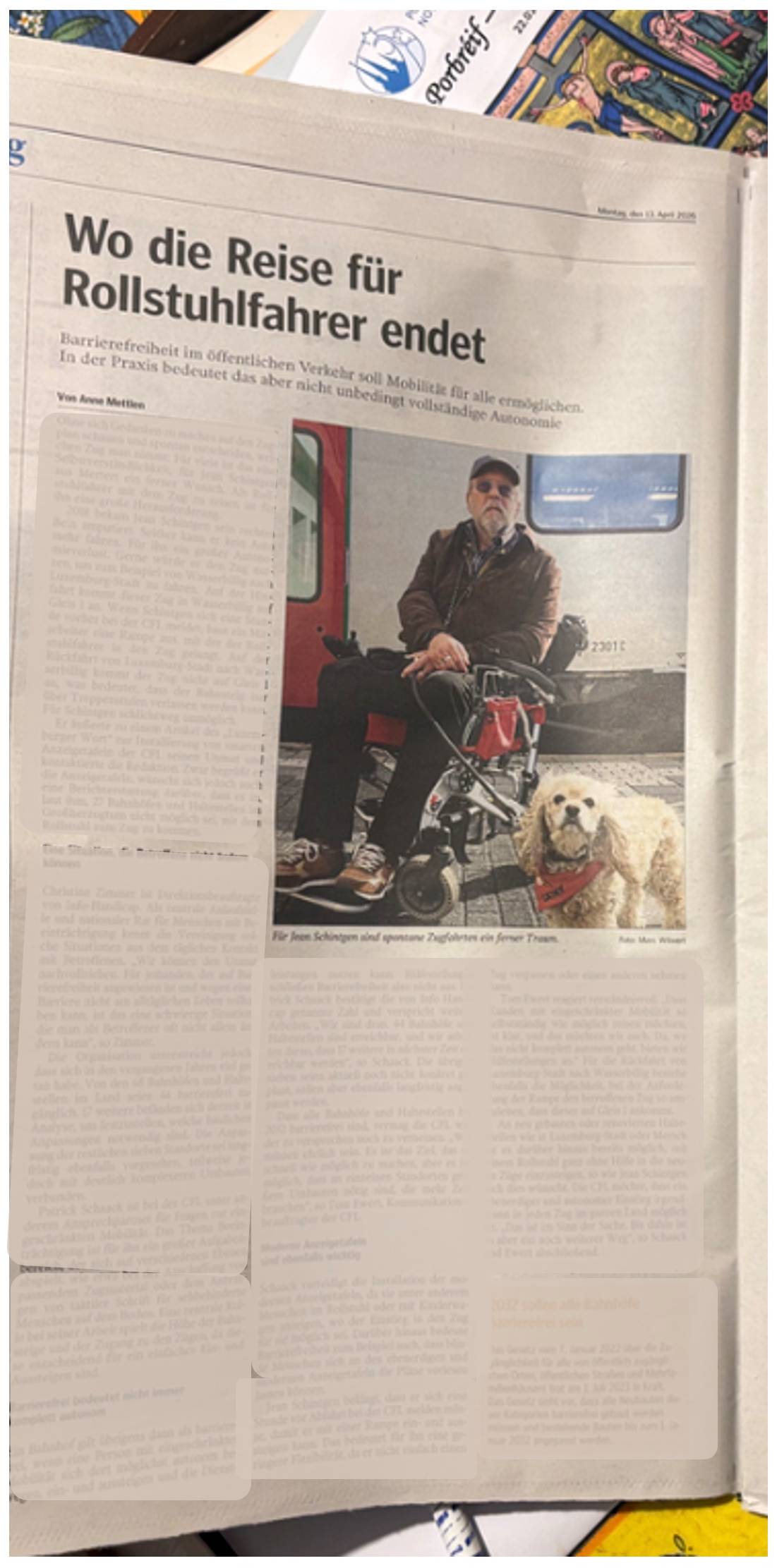
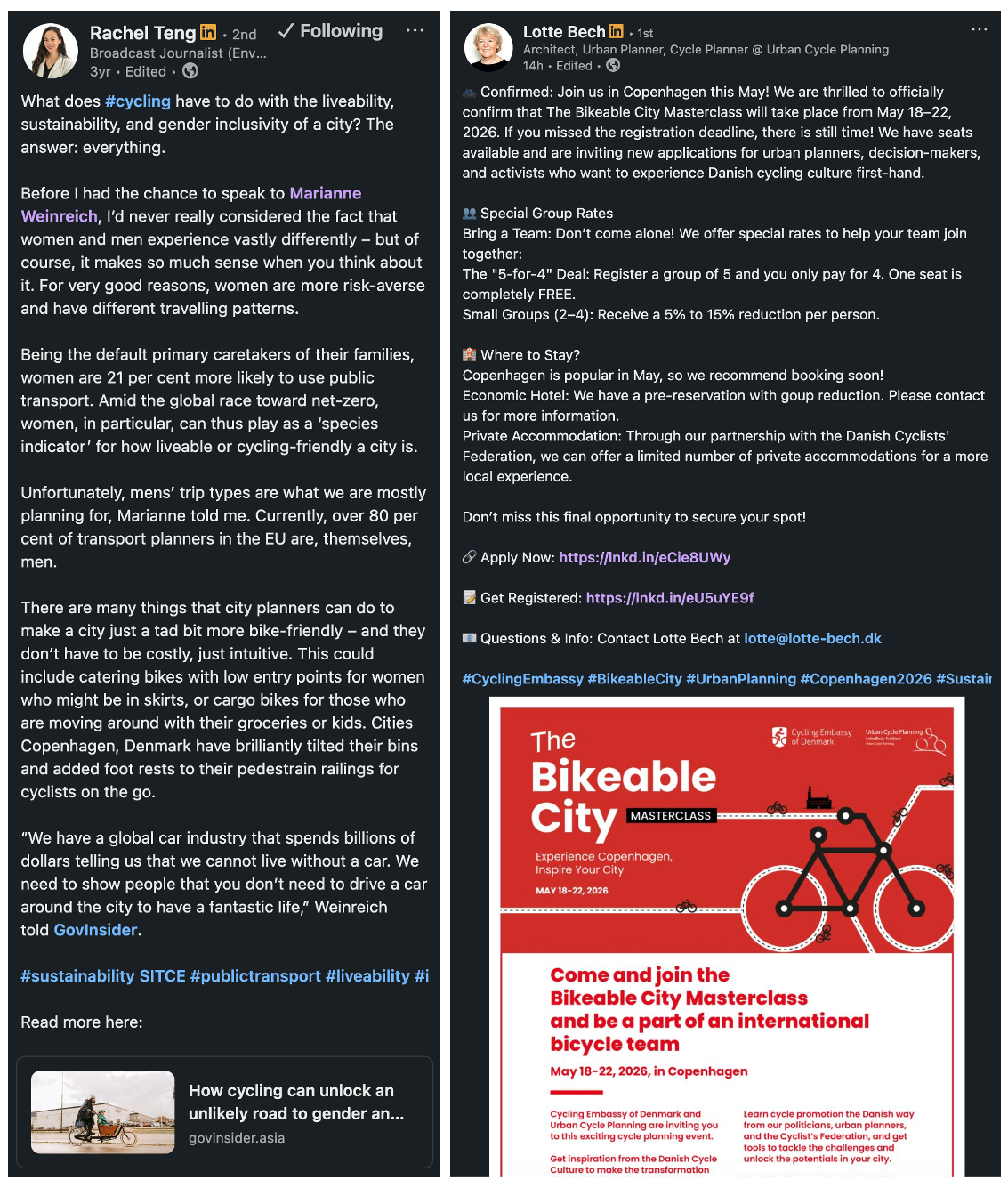
Marianne Weinreich offers a lens that sharpens this insight beyond the courtroom. She argues that women are the “species indicator” of a Liveable community. If women do not feel safe, the system is not functioning as it claims to.
Pinto’s intervention, and this petition, suggest that Luxembourg must take this test more seriously.
Because safety, in this context, is not theoretical. It is not something that exists in principle. It is something that must be experienced . . . consistently, predictably, without ambiguity.
When victims hesitate to report . . .
When cases are dropped without clarity . . .
When the system cannot even name the pattern it seeks to prevent . . .
then signal is subtle, but unmistakable: Safety exists . . . but not fully for you.
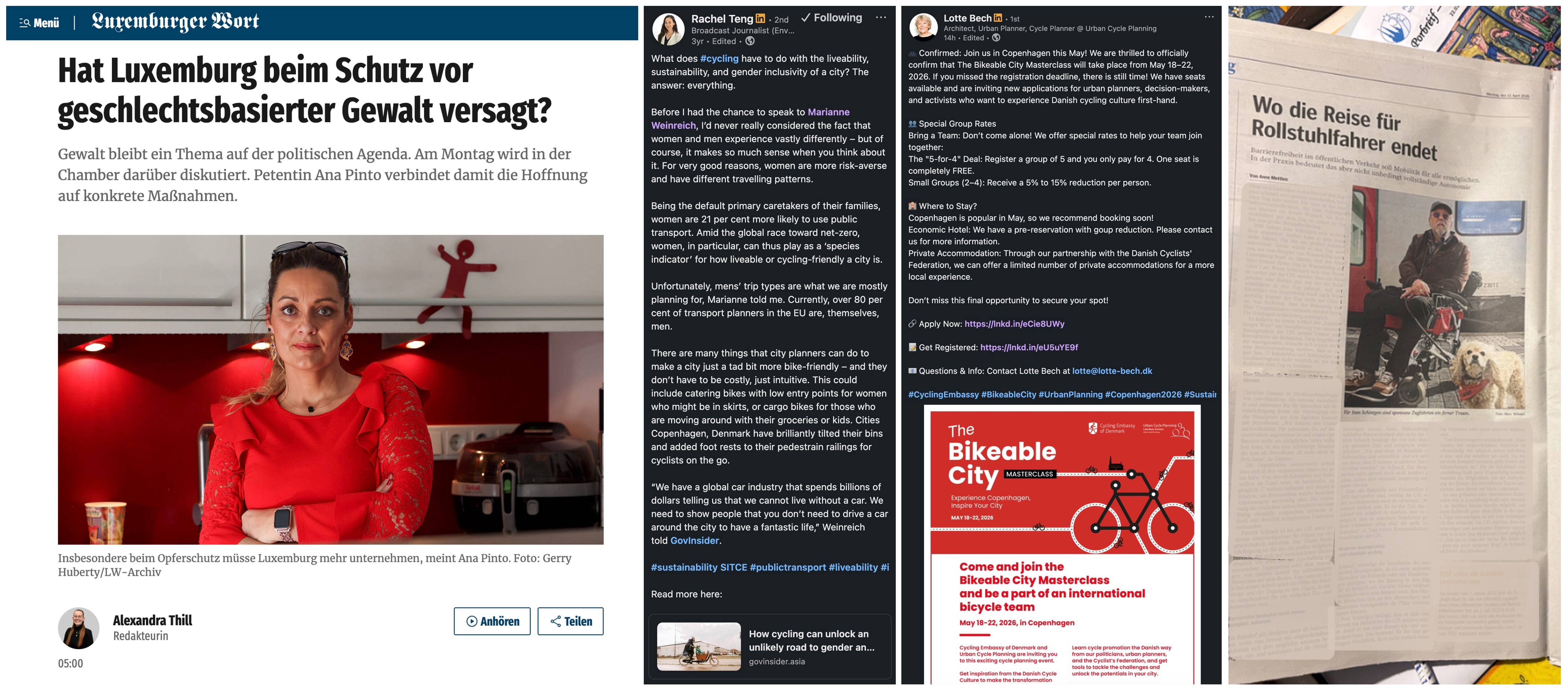
Lotte Bech, reflecting on communities that have chosen a different path, approaches the issues from the perspectives of construction and education:
- Safety must be experienced. Not promised. Not inferred. Not delayed. Experienced.
In Lotte Bech’s world, this principle manifests in infrastructure that anticipates real life . . . in education that begins with children . . . in governance that listens before it legislates. Systems are designed so that people do not need to explain themselves in order to be protected.
Pinto, through the urgency of her work, is asking for the same shift in a different domain:
- Not recognition after harm becomes undeniable. Not response after trust has eroded. But a system that is already oriented toward protection.
This is where Luxembourg faces profound choices:
- we can continue to treat gender-based violence as something to be improved incrementally within existing frameworks . . . or
- we can recognize what this petition reveals: deeper difficulty in designing systems around lived vulnerability.
Because law is also infrastructure:
- The absence of femicide in the penal code is not neutral. The absence of dedicated statistics is not neutral. The absence of clear categorization is not neutral.
These absences speak:
- They tell us who the system was designed around . . . and who must still be fitted into it.
Culture and education shape outcomes that extend far and wide. Pinto knows this when she calls for prevention in schools. Because by the time a case reaches the justice system, much has already been learned . . . about fear, about power, about whether speaking up leads to protection or to uncertainty.
Good governance is collaborative, and collaboration must begin with those who experience the limits of the system . . . not only those who manage it.
The petition is precise: it asks Luxembourg to align its legal language with a reality that already exists. To make visible what is currently diffuse. To create the conditions for better data, better prevention, and more coherent justice.
Above all, it asks a question that goes beyond this single issue:
- Are we willing to design our systems around those most at risk . . . or do we continue to expect them to adapt to systems that were not built with them in mind?
The debate in Parliament will provide answers on paper, and the real answer will be visible elsewhere:
- whether safety becomes something that must be argued for . . . or something that is simply there.