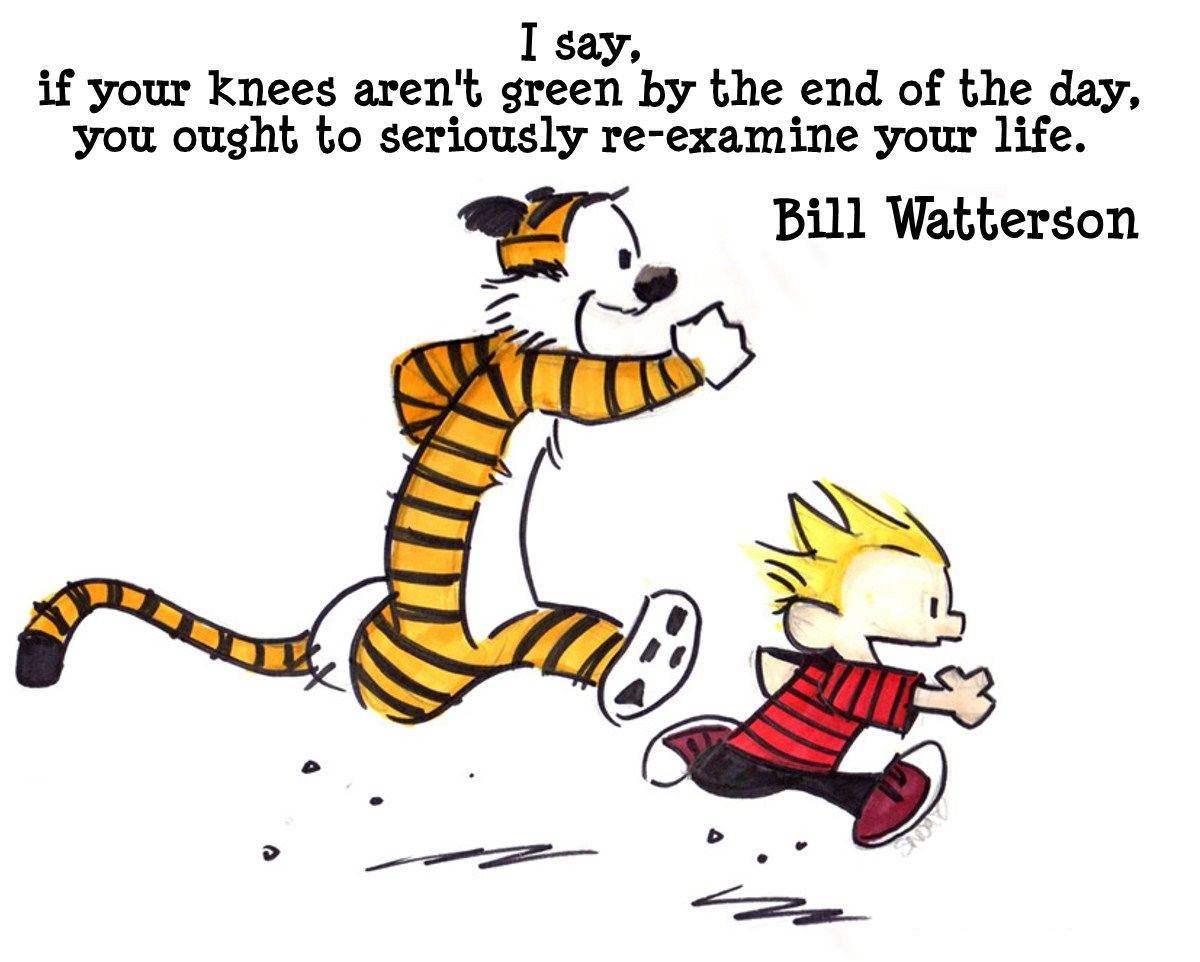
Question: How well do Calvin and Hobbes explain “Power” from Luxembourg to Moscow to Bern to Washington D.C. to Beijing to _ _ _ _ (Everywhere)? At first glance, Calvin and Hobbes feels like refuge: childhood, woods, sleds, dinosaurs, cardboard boxes. Author Bill Watterson was never offering escape. He was offering distance. Why?
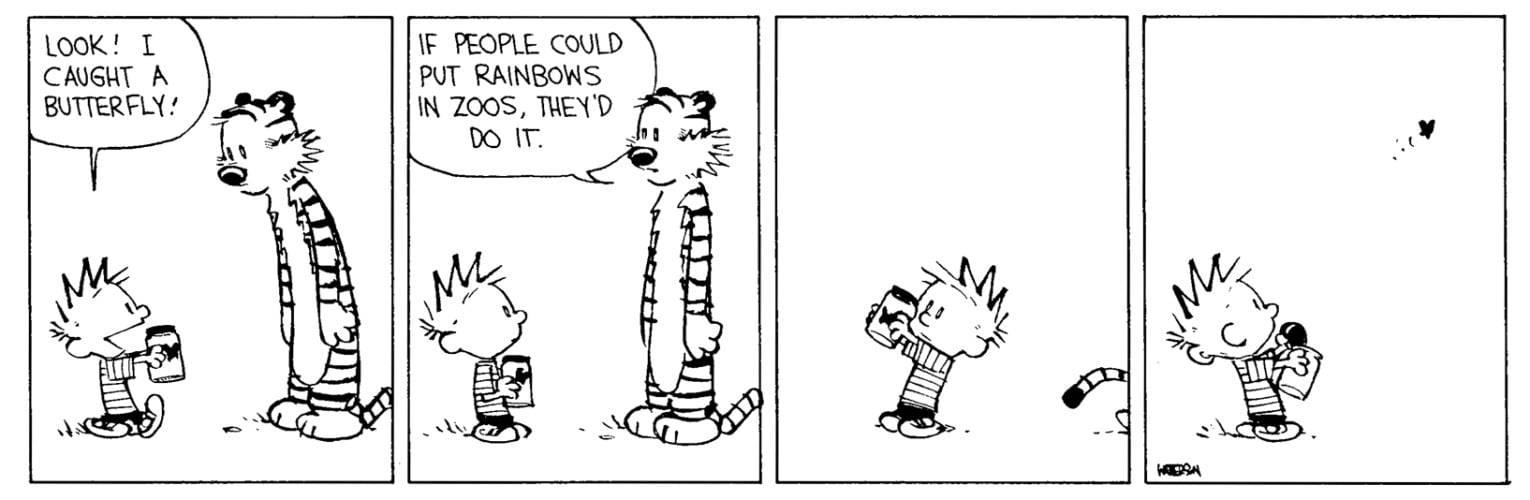
Distance is how one sees power clearly.
What is remarkable is not only how well Calvin and Hobbes diagnose modern politics, but how deeply they echo some of humanity’s oldest political and philosophical insights. Long before Bismarckian nation-states, China’s sages were wrestling with the same question Watterson poses quietly from the treeline:
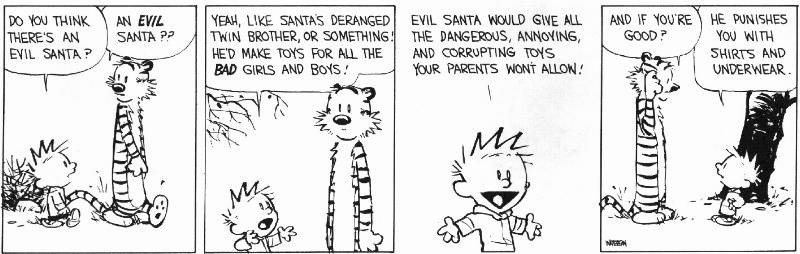
What happens when ego governs, and conscience is silenced? Calvin is not evil, but he is relentlessly self-justifying, allergic to limits, convinced of his own genius, and furious when reality resists him. He invents moral frameworks on the fly to excuse behavior he already wants.
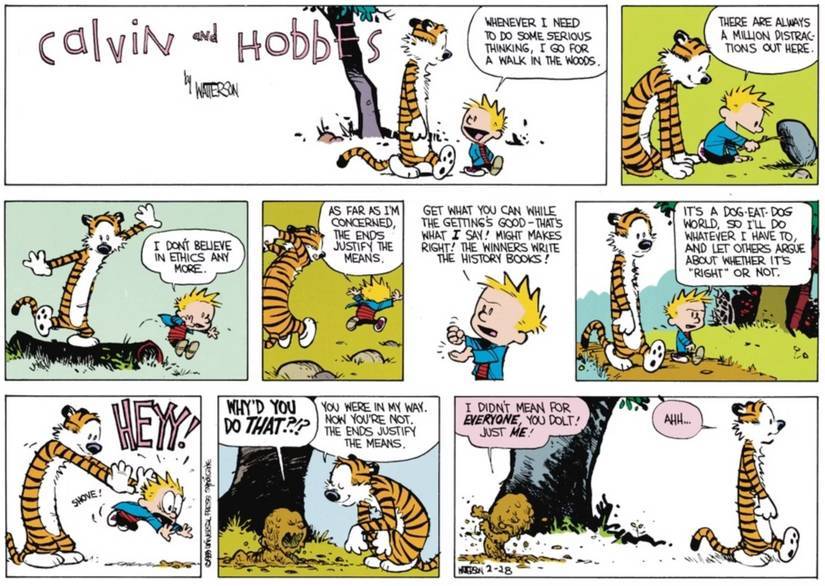
In Confucian thought, this figure has a name: 小人 (Xiǎo Rén). The “small person” driven by impulse, profit, and self-interest rather than reflection or responsibility. Confucius contrasted this figure with the 君子 (Jūnzǐ), the noble person who accepts limits, learns from failure, and aligns conduct with moral order.
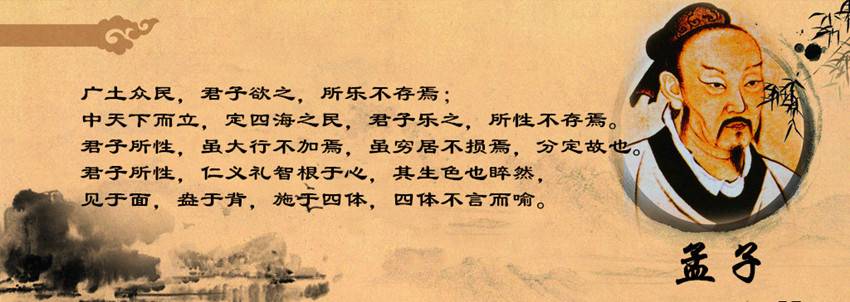
Calvin is the 小人 in miniature: endlessly clever, endlessly rationalizing, forever mistaking desire for entitlement. When this psychology grows up and acquires power, it ceases to be funny. It becomes governance without humility. Leadership without learning. Ego without a Hobbes.
Calvin’s tyrannies are comic because Hobbes punctures them instantly. No Hobbes allowed in the room: today’s grotesque “adult” tyrannies and tantrums gain velocity and reach.
Hobbes is not merely Calvin’s friend. Hobbes is restraint, irony, skepticism, ecological awareness, and moral memory. He laughs at Calvin’s schemes not from cruelty but from comprehension. Hobbes knows how systems end.
In ancient Chinese philosophy, Hobbes would feel immediately familiar. Hobbes resembles the 道家 (Dàojiā) sage: the one who understands 道 (Dào), the Way who aligns with nature rather than trying to dominate it. Hobbes (lounging in trees, observing seasons, questioning human pretensions) mirrors the Daoist principle of 无为 (Wú Wéi): acting without forcing, governing without coercion.
He is also something deeply Confucian: 诤友 (Zhèng Yǒu) the candid friend who corrects you, who risks discomfort to preserve integrity. Confucius warned that a society collapses not when rulers lack power, but when they lack honest companions. Why? In classical Chinese political culture, especially in the Confucian tradition, a leader without such friends was considered dangerously isolated.
Authoritarian systems understand this instinctively. They fear Hobbes. They silence witnesses. They flatten irony. They criminalize memory. In such systems, Hobbes must be stuffed, declawed, and pushed out of sight. Watterson understood what emperors and autocrats have always known: imagination is dangerous to the shamelessly shameless power-mongers because imagination multiplies perspectives for Decency.
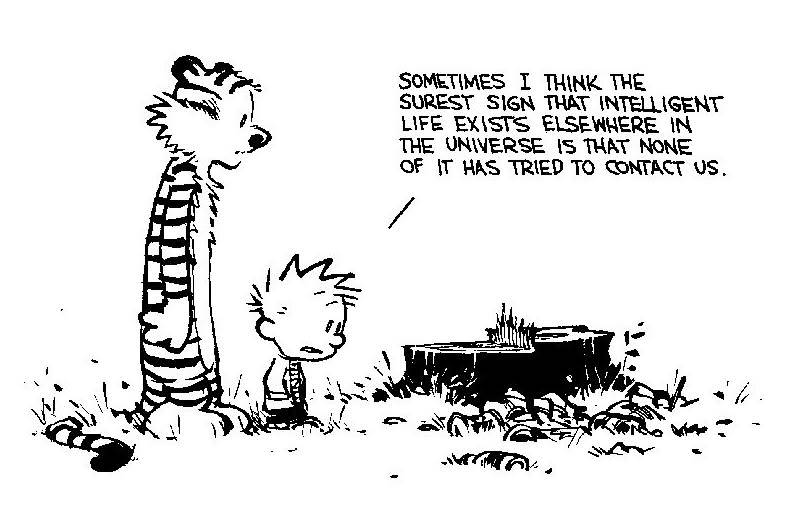
Calvin’s cardboard box becomes a transmogrifier, a duplicator, a time machine: absurd, creative, temporary. The joke works because everyone knows it is a box.
Adult power systems do the same thing but insist the box is permanent and sacred: Nationalism. Fossil-Fueled Dark-Money. Security kabuki-theater. Unlimited Growth myths.
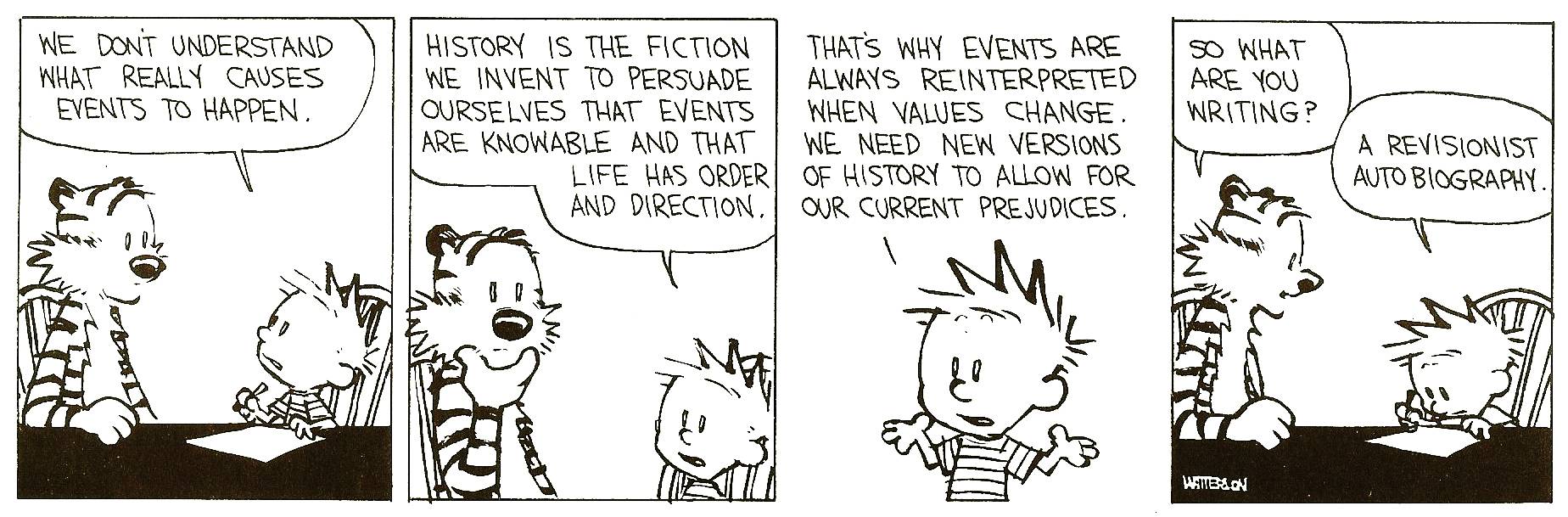
Ancient Chinese thinkers had a precise warning for this. Confucius called it the failure of 正名 (Zhèng Míng): the rectification of names. When titles, ideologies, and systems no longer correspond to reality, society drifts into dysfunction. Names replace substance. Appearances replace truth.
The tragedy of many modern leaders is not villainy but incuriosity: becoming immaculate administrators of the box, defending systems not because they serve life, but because questioning them would require imagination, humility, and risk. Watterson would recognize it instantly.
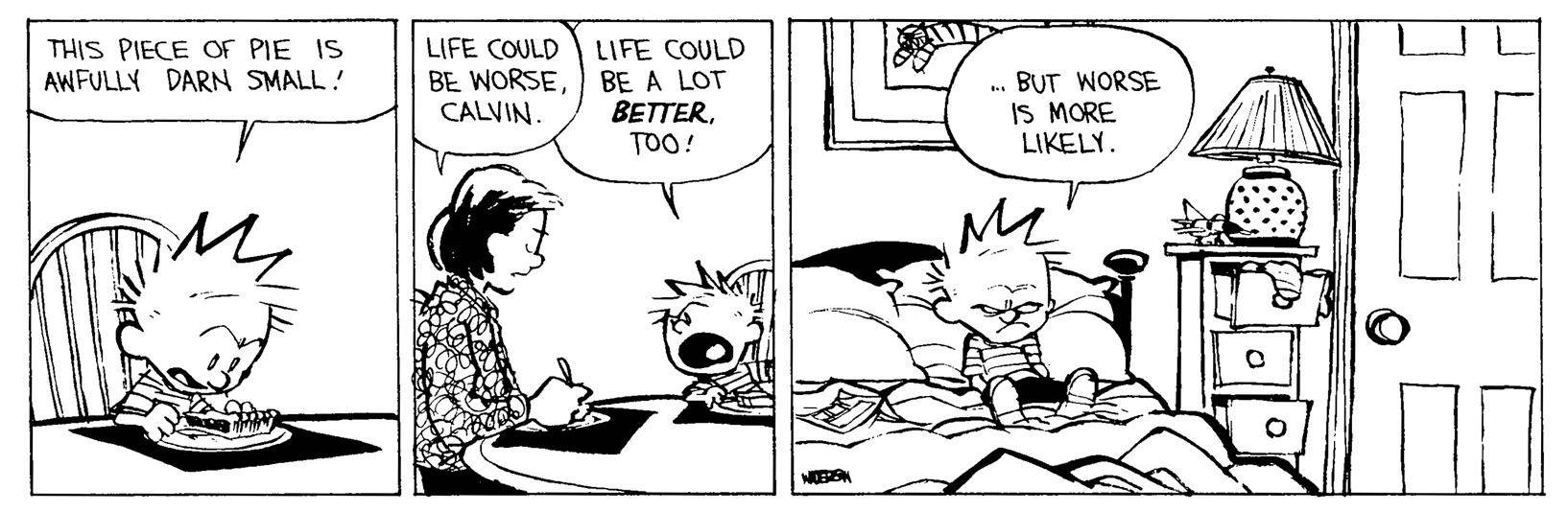
Calvin and Hobbes belong in the woods, on sleds, staring at the sky asking unanswerable questions. Power too often belongs in palaces, bunkers, and boardrooms with windows that do not open.
This tension is ancient.
When Chinese courts grew corrupt or absurd, poets and scholars withdrew to mountains and gardens. 陶渊明 (Táo Yuānmíng) famously resigned from office rather than compromise his integrity, choosing fields and chrysanthemums over titles and salaries.
The forest was not retreat. It was clarity. Watterson’s quiet genius was to show that moral clarity does not come from power but from play, humility, and attention to the living world.
Watterson’s refusal to merchandise Hobbes was not aesthetic: it was ethical. Once the tiger becomes a brand, the imagination is already compromised. One can hear Watterson saying:
一旦你卖掉了老虎,孩子就已经迷失了。
(Once you sell the tiger, the child is already lost.)
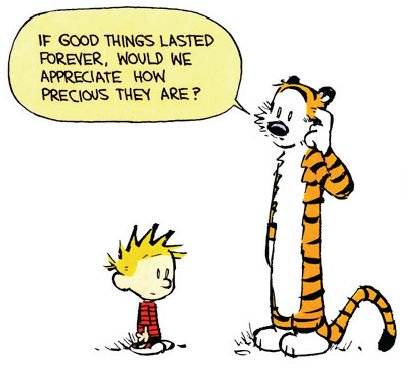
Why does this matter for Climate, Decency, and Youth4Planet? Calvin and Hobbes do not teach us how to defeat bad leaders. Calvin and Hobbes teach us how systems fail: when imagination collapses into entitlement, when names detach from reality, when Hobbes is silenced.
Climate breakdown is not only a technical failure. It is a philosophical one. A 小人 civilization defending cardboard boxes while forests burn. A refusal to listen to Hobbes, scientists, youth, ecosystems, and future generations.
The antidote is not louder outrage.
The antidote is deeper curiosity, sharper irony, and the courage to walk back into the forest and ask better questions.
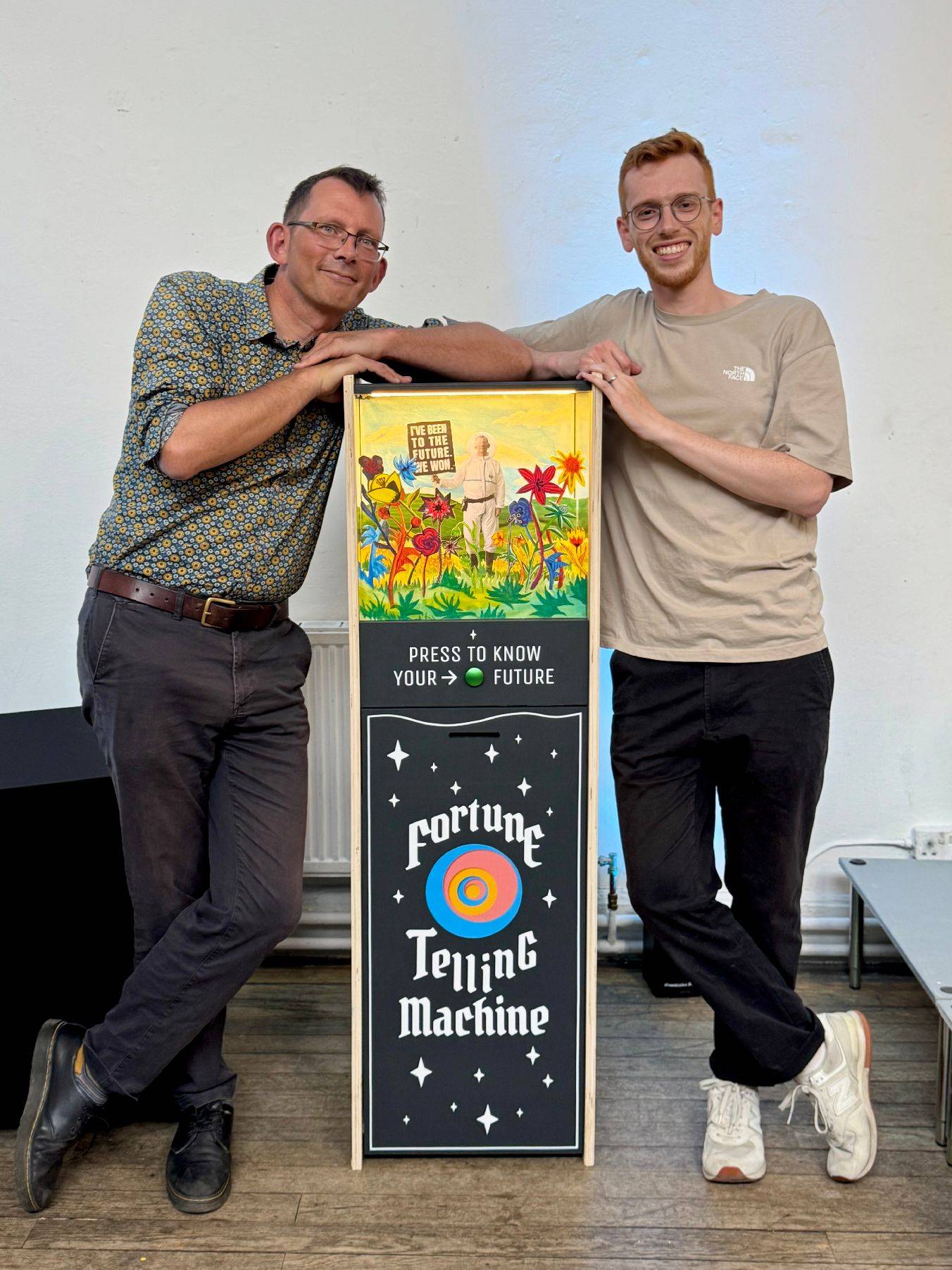
That lesson is ancient. It is planetary. Exactly the work Youth4planet 🇱🇺Luxembourg exists to do. Please spare a minute today to Thank PAUL THILTGES and Joerg Altekruse for their tireless work empowering Youth FOR Planet’s teams🙏