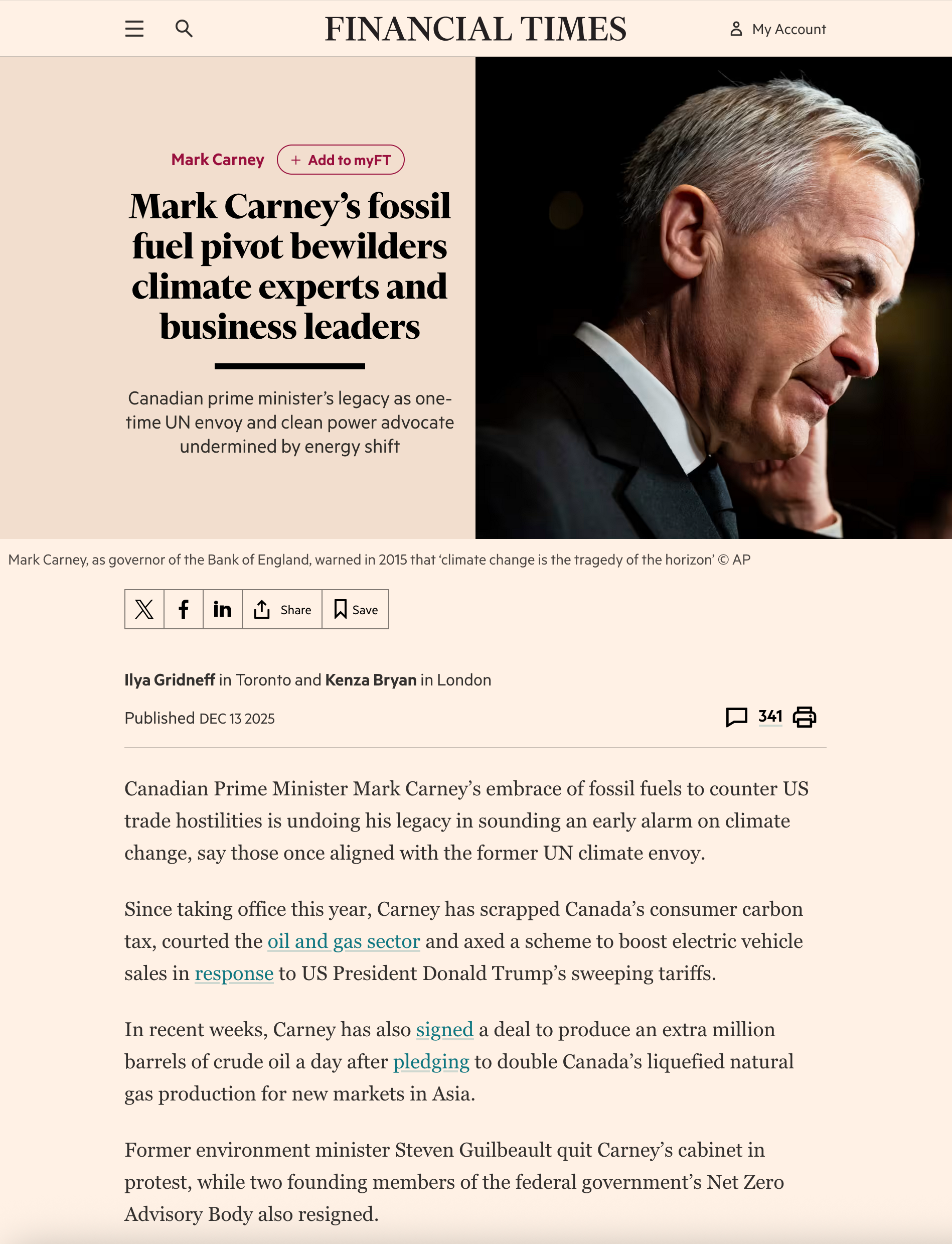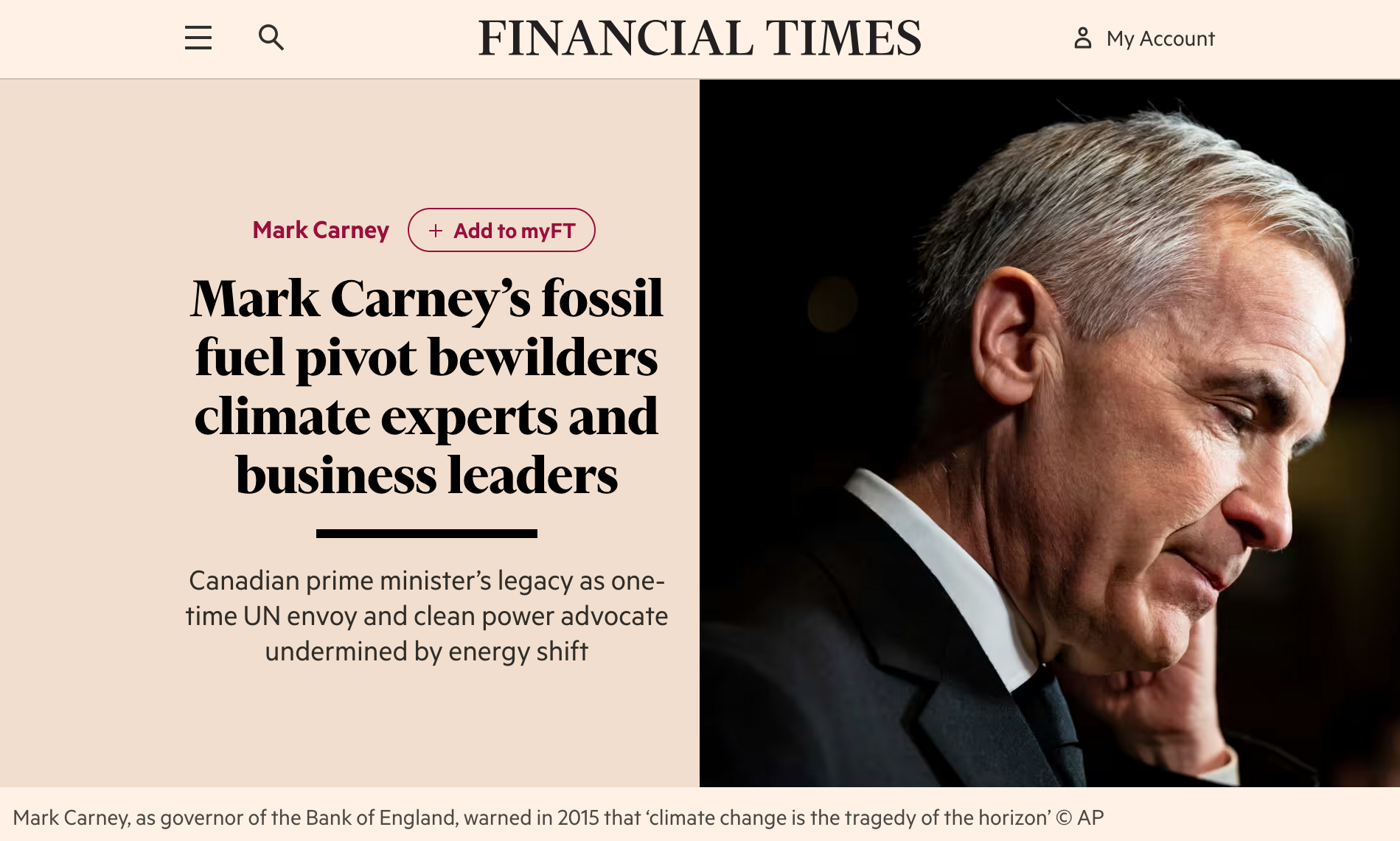
Why is 🇨🇦 Canada’s Prime Minister Mark Carney . . . the man who first warned Wall Street about “the tragedy of the horizon” . . . now betting Canada’s future on the wrong side of history? Why is his “energy pragmatism” pivot, a response to Mafia-Leech-Trump’s U.S. tariffs, a multi-billion-dollar gamble on technological spectacle? Why is a data-backed blueprint for a cheaper, healthier, more sovereign nation gathers dust? What if Canada’s ultimate national project isn’t another pipeline, but becoming the architect of North America’s resilient, clean energy grid?
The most compelling case for Canada’s future is in the numbers from The Solutions Project’s 100% Renewable Energy transition-roadmap for Canada, contrasted with the policy reality of Prime Minister Carney’s government. This is not a debate about “idealism” versus “realism”. It is a stark analysis of two economic futures: one a high-risk political wager, the other a high-certainty engineered system.
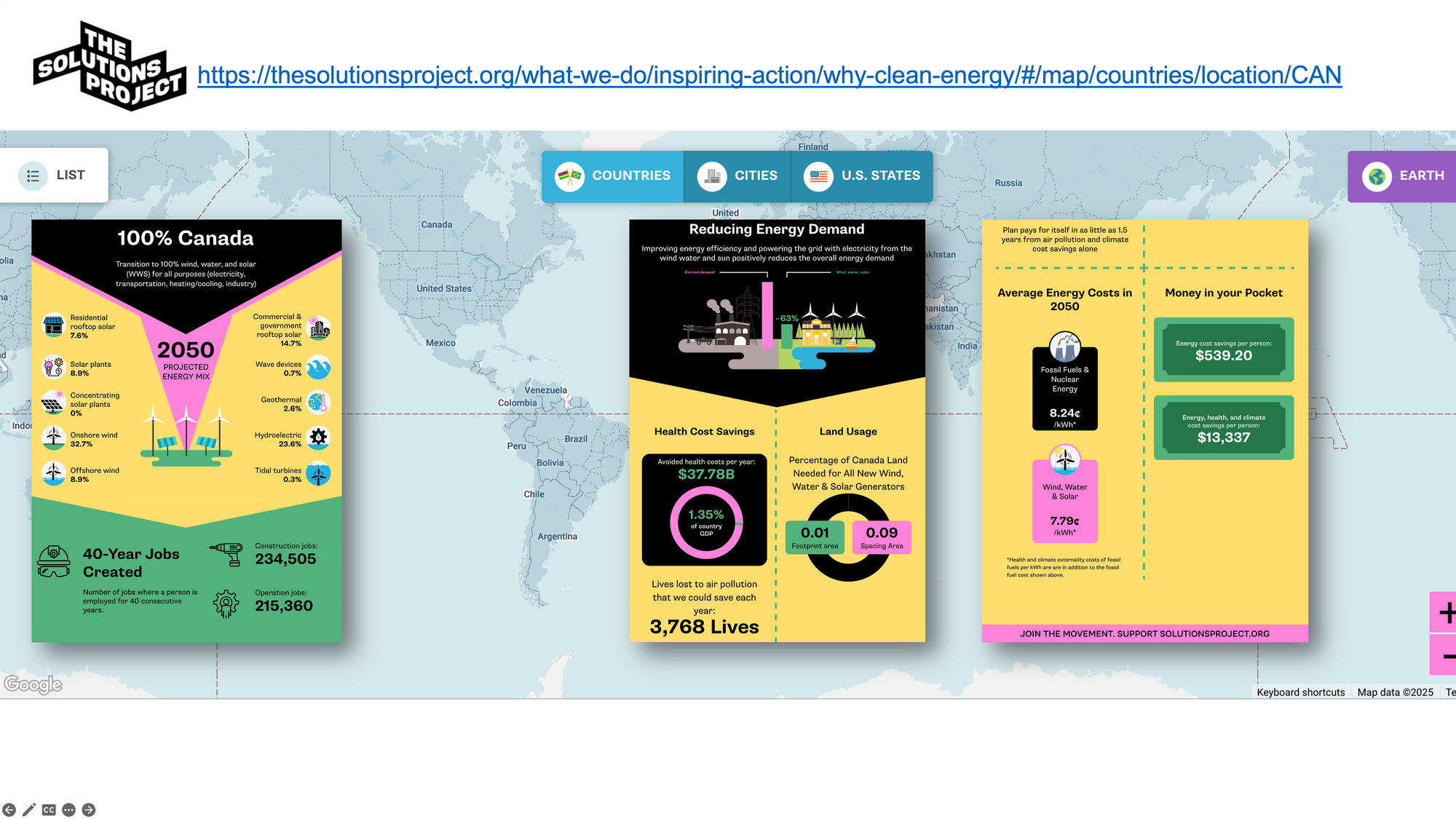
The WWS model is not a wish list; it is a techno-economic simulation of a fully decarbonized Canada by 2050. Its outputs are specific, staggering, and speak to core national interests:
‣ Long-Term Job Creation (40-year jobs): 449,865 (234,505 Construction + 215,360 Operations)
‣ Annual Public Health Savings: $37.78 Billion (1.35% of GDP)
‣ Lives Saved Annually (from air pollution): 3,768
‣ Energy Cost in 2050: 7.79¢ /kWh
‣ Combined National Savings/Person/Year (Energy, Health, Climate): $13,337
‣ System Payback Period: 1.5 years (from health/climate savings alone)
This data outlines a national dividend that is being deliberately forgone. The government’s alternative, as reported by the Financial Times, is a “grand bargain” centred on a high-risk, low-probability gamble:
‣ The Spectacle: Betting billions on unproven Carbon Capture and Storage (CCS) at scale and new fossil fuel infrastructure to enable a “decarbonized oil” narrative.
‣ The Trade: Sacrificing near-term climate regulations (2030 emissions cap, clean electricity rules) for provincial deals and the promise of future technological fixes.
‣ The Risk: Committing to stranded assets in a decarbonizing world and actively eroding the credibility Carney himself spent a decade building as a global climate finance leader.
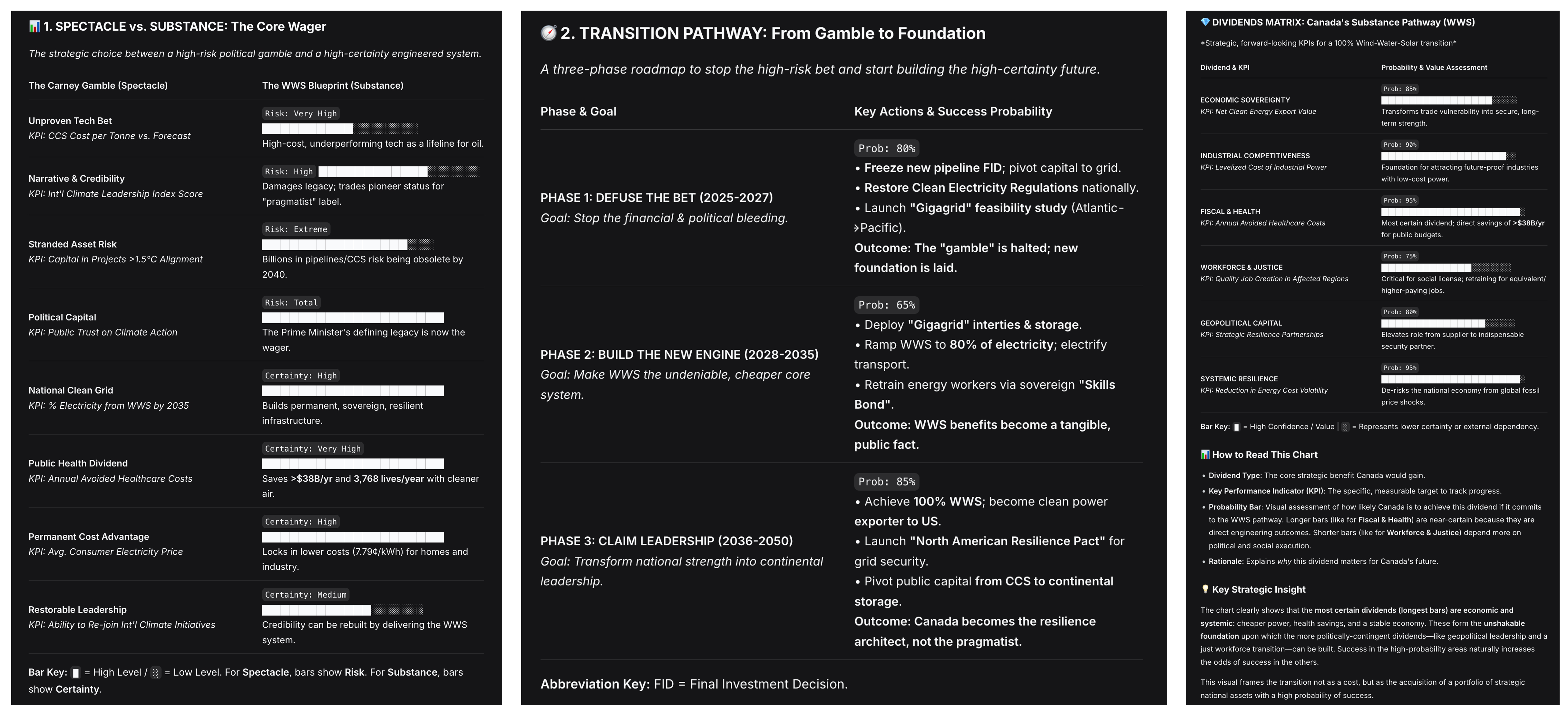
This is the core wager: Spectacle versus Substance. Correcting course does not require an overnight revolution. It requires a disciplined, three-phase pivot from volatile gambling to building permanent value.
PHASE 1: DEFUSE THE BET (2025-2027): Probability of Success: 80%. Goal: Stop the financial and political bleeding of the spectacle gamble. Actions: Freeze Final Investment Decisions (FID) on new fossil infrastructure; restore national Clean Electricity Regulations; launch a sovereign “Gigagrid” feasibility study.
PHASE 2: BUILD THE NEW ENGINE (2028-2035): Probability of Success: 65%. Goal: Make the WWS system the undeniable, cheaper core of the economy. Actions: Deploy East-West grid interties and storage; ramp WWS to 80% of electricity; fund a national “Skills Bond” for energy worker retraining. Success hinges on executing large-scale, publicly visible infrastructure.
PHASE 3: CLAIM LEADERSHIP (2036-2050): Probability of Success: 85%. Goal: Transform national strength into continental resilience leadership. Actions: Achieve 100% WWS; become a clean power exporter to the U.S.; launch a “North American Resilience Pact” for grid security. By this phase, the economic and technical advantages become self-evident and politically unassailable.
The Ultimate Test of Legacy: This analysis reveals a profound contradiction. The work of Diana Fox Carney. . . the economist whose podcast Carbon Hunters explores the very mechanisms for a smart transition . . . now sits as a policy toolkit shelved by her husband’s government. It underscores that the instruments for a wiser path are known, yet deliberately set aside for a short-term wager.
Prime Minister Carney now faces his ultimate “tragedy of the horizon.” The spectacle gamble offers immediate political narrative but mortgages the future with high risk and diminishing returns. The substance pathway requires near-term political courage to unlock monumental, certain dividends in health, wealth, and sovereignty.
For Canada’s youth, climate voters, and all stakeholders: The demand is clear. The first step is not “Net Zero by 2050,” but “Freeze the Final Investment Decision.” Halt the capital commitment to the failing gamble. Force a side-by-side audit of the spectacle against the substance blueprint.
The data is irrefutable. The pathway is mapped. The question is whether the architect of the Glasgow Financial Alliance for Net Zero will be remembered as the leader who bet it all on the fossils of the past, or the statesman who pivoted to build the resilient foundation for the next century.
The real grand bargain isn’t with a province. It’s with the future.
– – –
Read Financial Times Journalists Ilya Gridneff + Kenza Bryan’s article: Mark Carney’s fossil fuel pivot bewilders climate experts and business leaders #GiftLink https://giftarticle.ft.com/giftarticle/actions/redeem/55ea02d9-9e75-42f3-8f09-5156a092d0c5