At last Wednesday’s Social Climate Plan consultation (how Luxembourg plans to support vulnerable households + micro-enterprises in response to rising fossil fuel costs) . . . we discussed Active Mobility incentives per kilometer. Let’s strive to answer two questions:
(A) can Luxembourg reduce our traffic congestion bill without reducing our car-kilometers?
(B) Are targeted, well-designed bicycling incentives some of the most cost-effective tools available?
Two Mobility Options for Luxembourg: Belgium’s Proven Model or a Tiered Luxembourg Incentive . . .
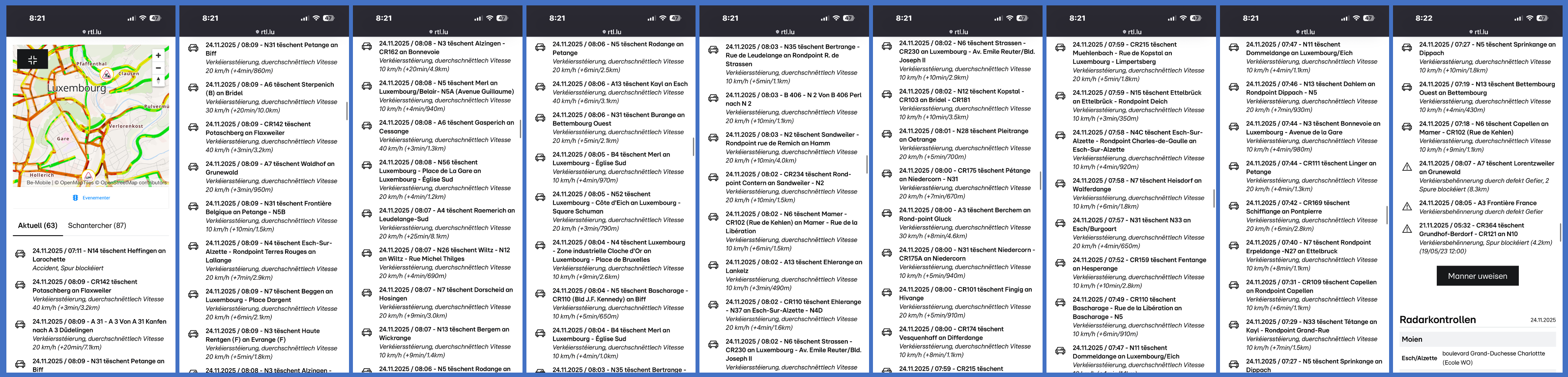
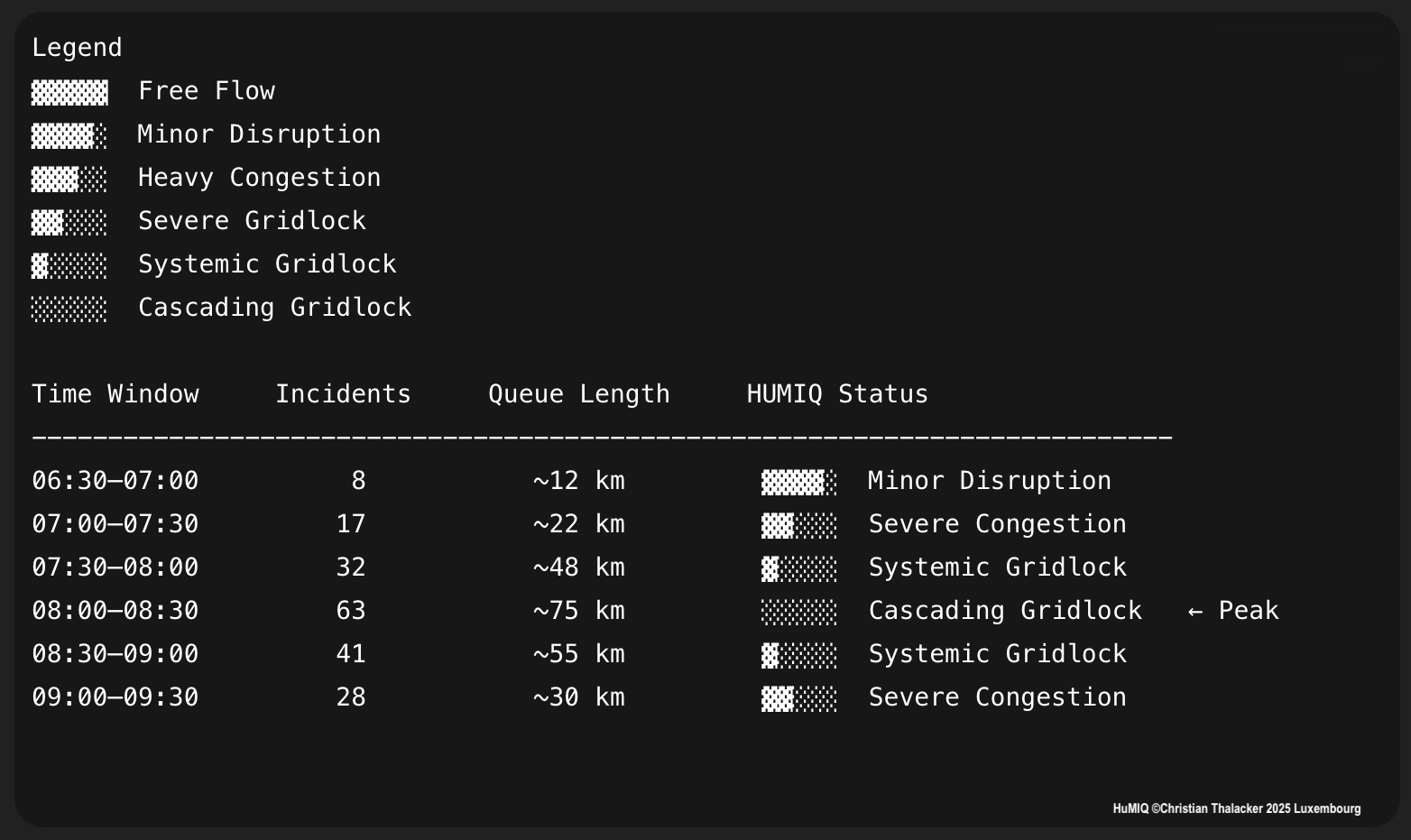
On 24 November 2025, between 07:45 and 08:30, Luxembourg’s road-system experienced week-day business-as-usual grid-lock levels of congestion. We can outline two concrete, fiscally responsible paths forward. Your feedback on the Congestion Curve derived directly from RTL Lëtzebuerg’s incident data for the morning peak? Interpretation: By 07:45 the system entered systemic gridlock . . . by 08:15, we observed full cascading gridlock.
The cumulative cost for this morning alone: €300,000 to €500,000, depending on valuation assumptions.This raises a policy question: How can Luxembourg reduce this predictable, measurable, and preventable economic cost? Two credible options:
· Option A — Belgium’s cost-neutral mobility efficiency measure: €0.35 Flat Rate per kilometer commuted between home and private employer
Belgium has demonstrated that a simple, nationwide, per-kilometer bicycle allowance—administered via employers and reimbursable by the state—shifts measurable numbers of commuters out of cars.
- €0.35 reimbursed per bicycle kilometer
- Tax-free income for employees
- Managed by HR (no new institutions required)
- Proven uptake and measurable modal shift
- Eligible for support via EU Social Climate Funds
- Highest impact for short and mid-distance commutes
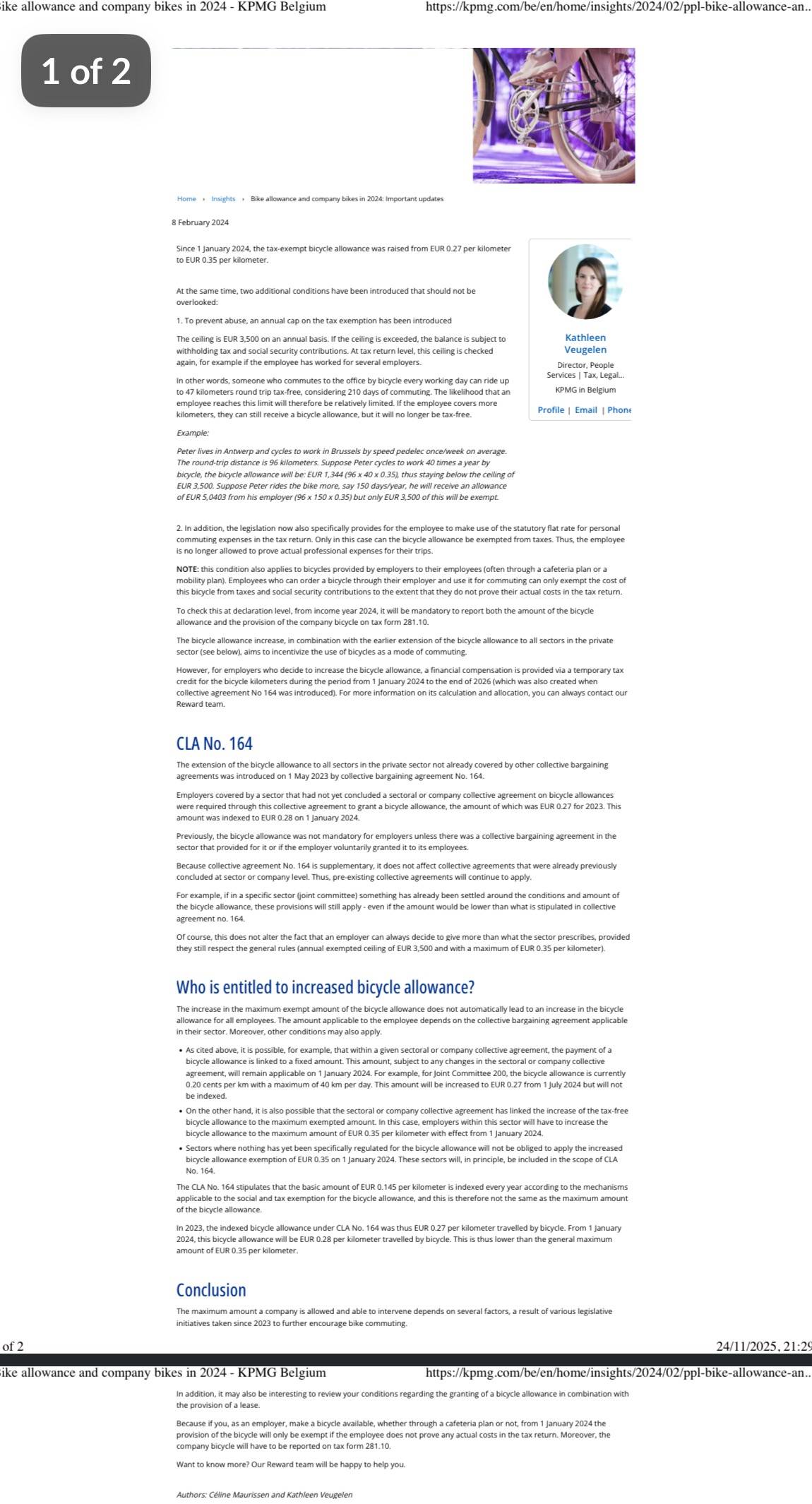
- see attached KPMG Belgium update
This is a ready-to-deploy model with low administrative overhead.
· Option B — Luxembourg Tiered Incentive (Rewarding Longer Distances)
A Luxembourg-specific approach would mirror the equity principle of Belgium but add distance-sensitive tiers:
- First 30 km: €0.35/km
- Next 30 km: €0.25/km
- Beyond 60 km: €0.15/km
This structure recognises: - Cross-border travel reality
- The cost of replacing long car commutes
- Luxembourg’s higher wage structure
- The strategic value of predictable mobility for major employers
A tiered system would allow all Active Mobility participants . . . short-distance cyclists + medium-distance cyclists + long-distance Active Mobility commuters to be rewarded proportionally.
MERCI Villmols 🇱🇺Social Plan Discussion organizers: Ministère de l’Environnement, du Climat et de la Biodiversité + Ministère de l’Économie – Luxembourg + Klima-Agence + especially André Weidenhaupt.