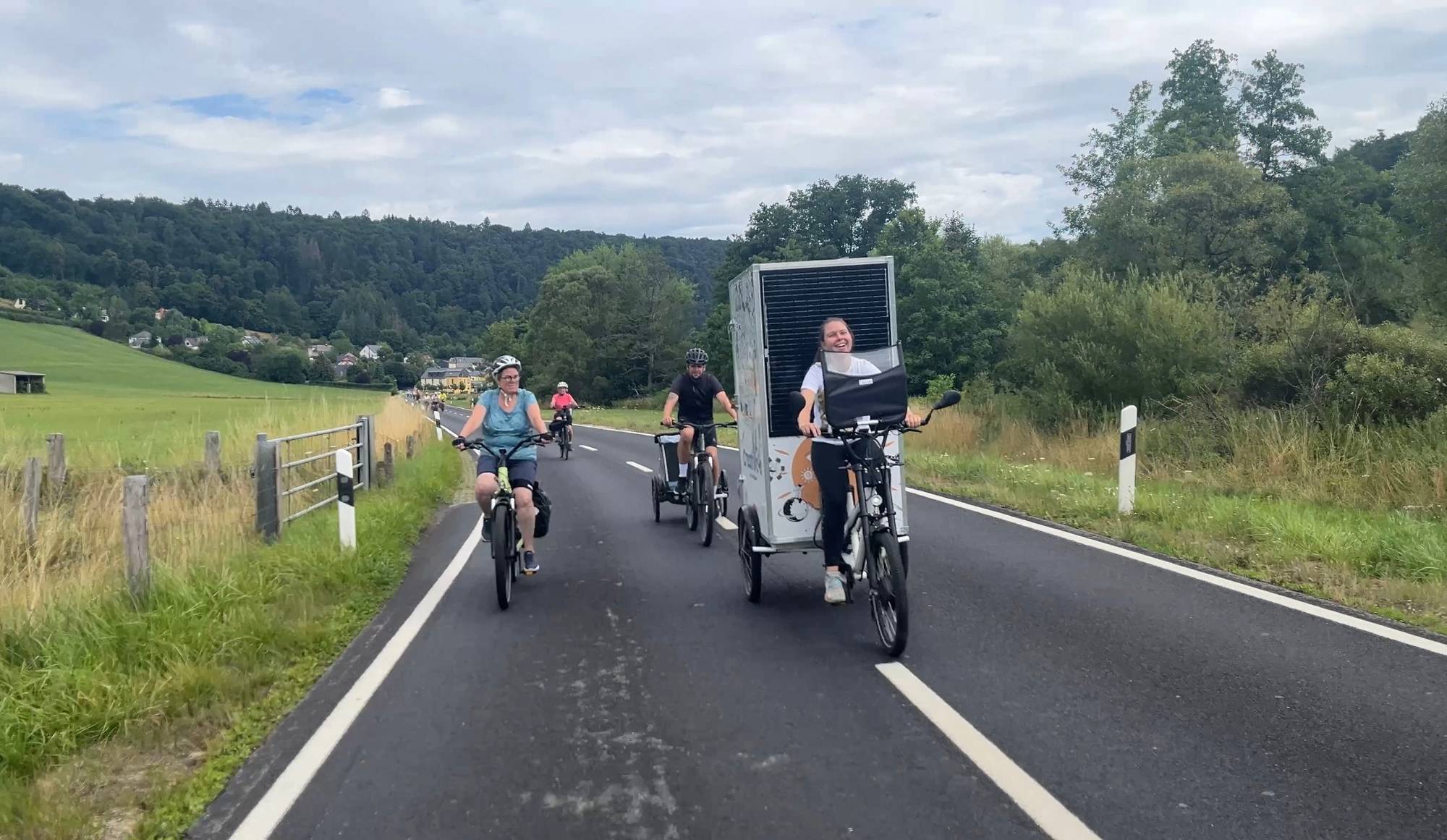
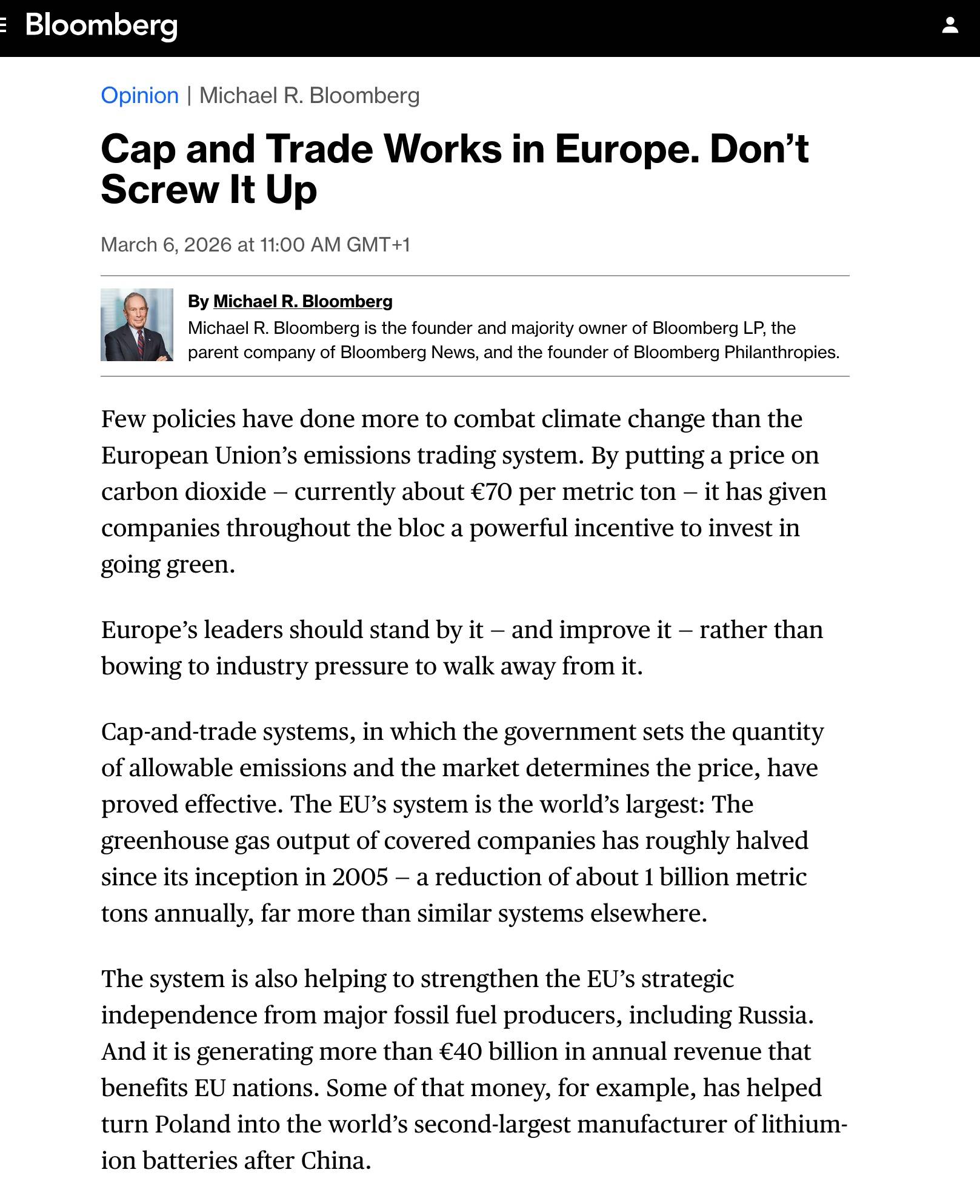
I asked the Great and the Good for a few reflections. As additional entries are received, these voices will be included. Here is Youth4Planet’s 2025 intern Jacqueline Zweers’ thoughts: Nowadays and even more in the future . . . so many jobs in different fields are threatened to disappear because of AI. However, there is a solution. The solution is of European nations investing into renewable energies . . . creating millions of new jobs and most importantly saving the planet. As written in the article: This century may yet be for creating solutions to save this planet by critical thinking and ambitious working. Our following generations will thank us for this. We are all in this together and it is our responsibility to create a viable environment.
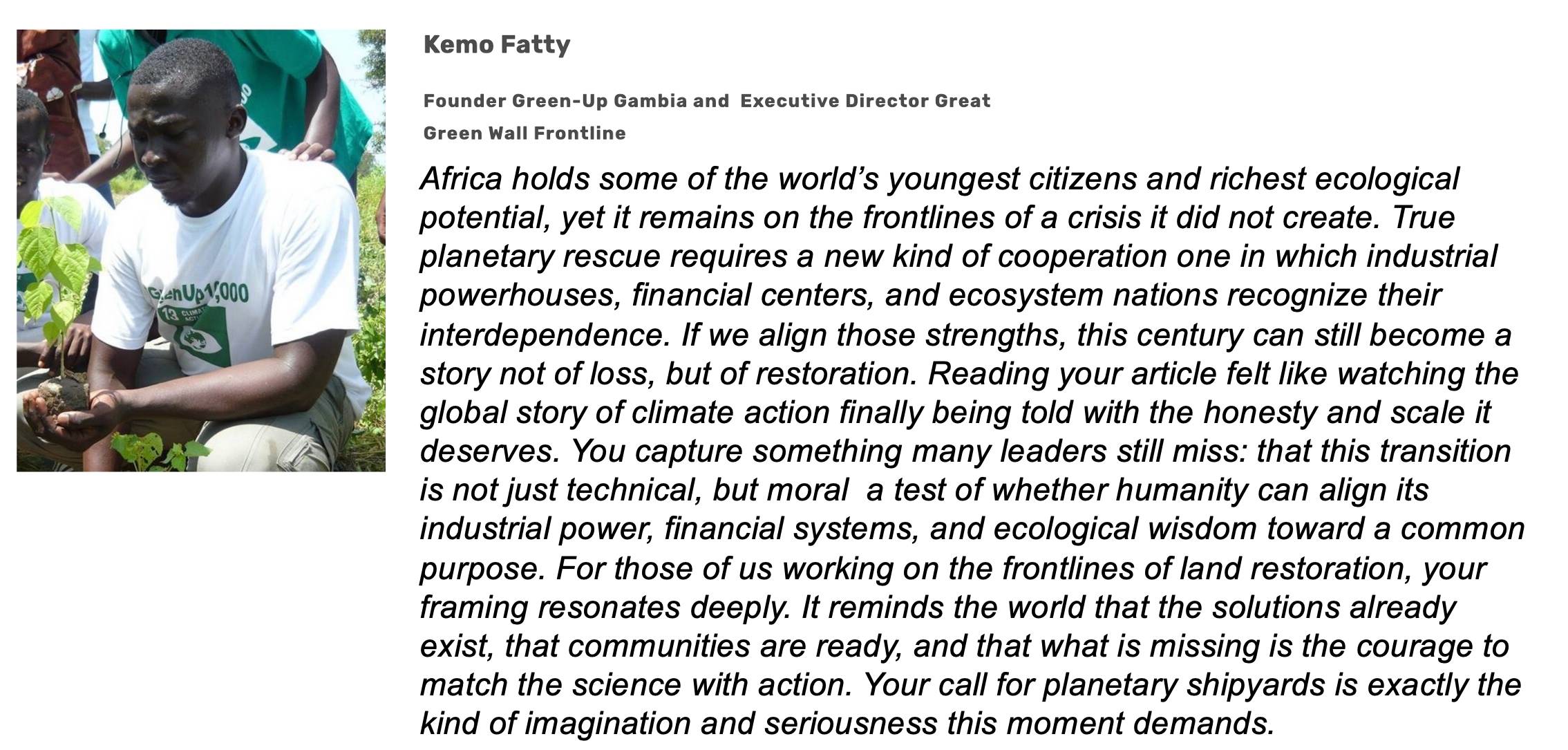
The young Bernie Sanders of Africa . . . Kemo Fatty issues this call to action:


_ _ _ _ _ _ _ _ _ _ _ _ _ _ _ _ _ _ _ _ _ _ _ _ _ _ _ _ _ _
More thoughts from The Great and The Good will be published in this space above my article.
_ _ _ _ _ _ _ _ _ _ _ _ _ _ _ _ _ _ _ _ _ _ _ _ _ _ _ _ _ _
When I was a boy living with my grandparents in Luxembourg, my grandmother would take me by the hand and walk with me to the town library at Place Aldringen. By age eight, I had exhausted every English-language book in the building . . . twice over. Hungry for more, I earned money painting shutters, filling flower-boxes, and pulling weeds . . . and I used that money to buy the Financial Times newspaper and The Economist magazine, eventually securing a subscription to Bloomberg.

For decades, these publications documented a single, unmistakable economic narrative . . . the deliberate construction of China as the industrial engine of the world. From renewable energy to electronics. From textiles to the ebikes parked quietly in Luxembourg’s courtyards. China’s manufacturing and supply-chain capacity has no parallel.
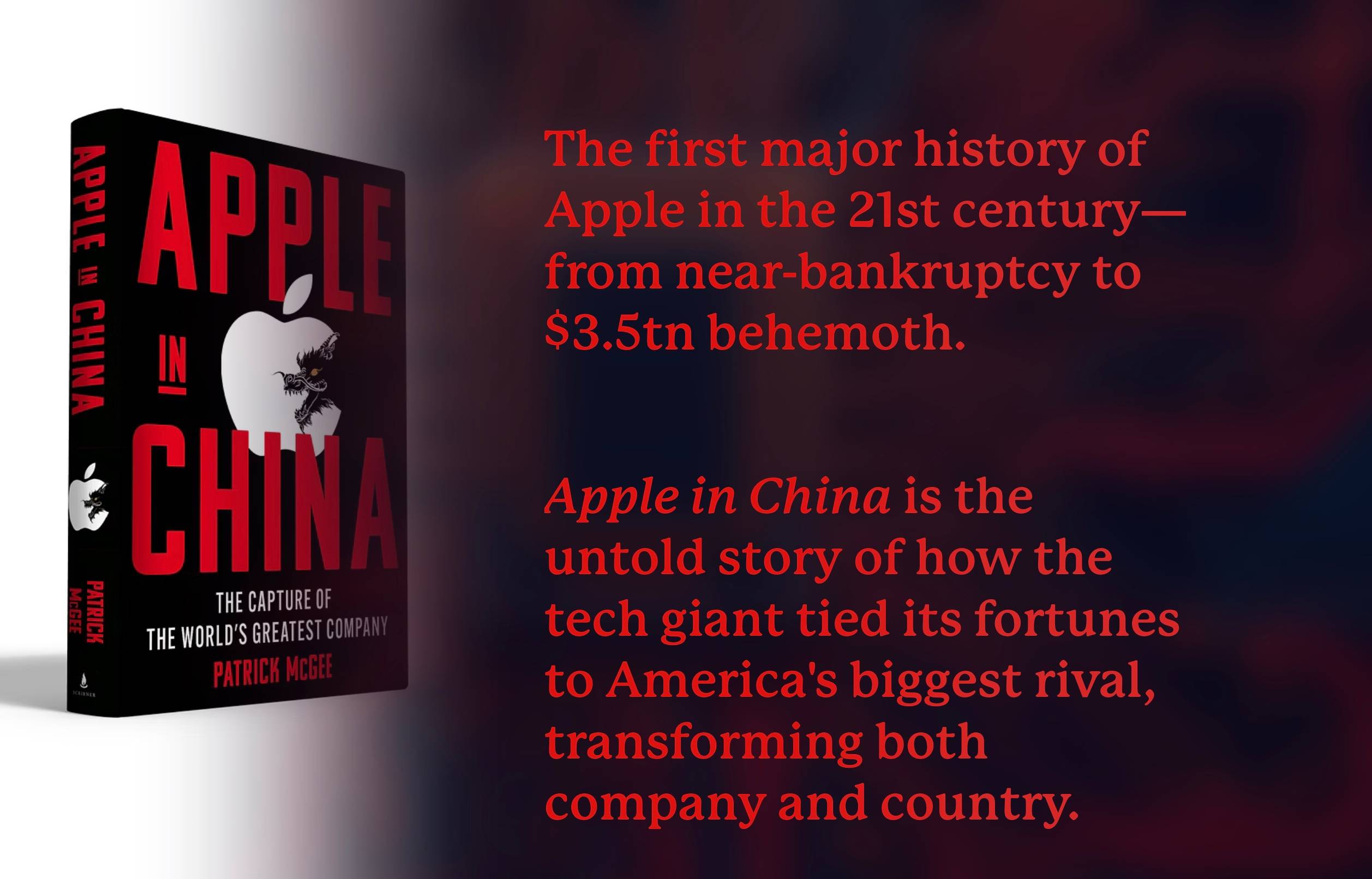
As Financial Times journalist Patrick McGee documents in his book “Apple in China“, Apple has invested hundreds of billions of dollars over the years into its China operations. A significant portion of that investment has gone into training millions of Chinese workers in advanced manufacturing . . . building an industrial ecosystem whose depth and sophistication McGee correctly compares to a modern Marshall Plan in scale and intent.
We in the West spent decades consuming the goods China built at extraordinary speed . . . and China, as the world’s first mover in clean-tech industrialisation, now holds the capability to redirect that engine toward planetary repair.
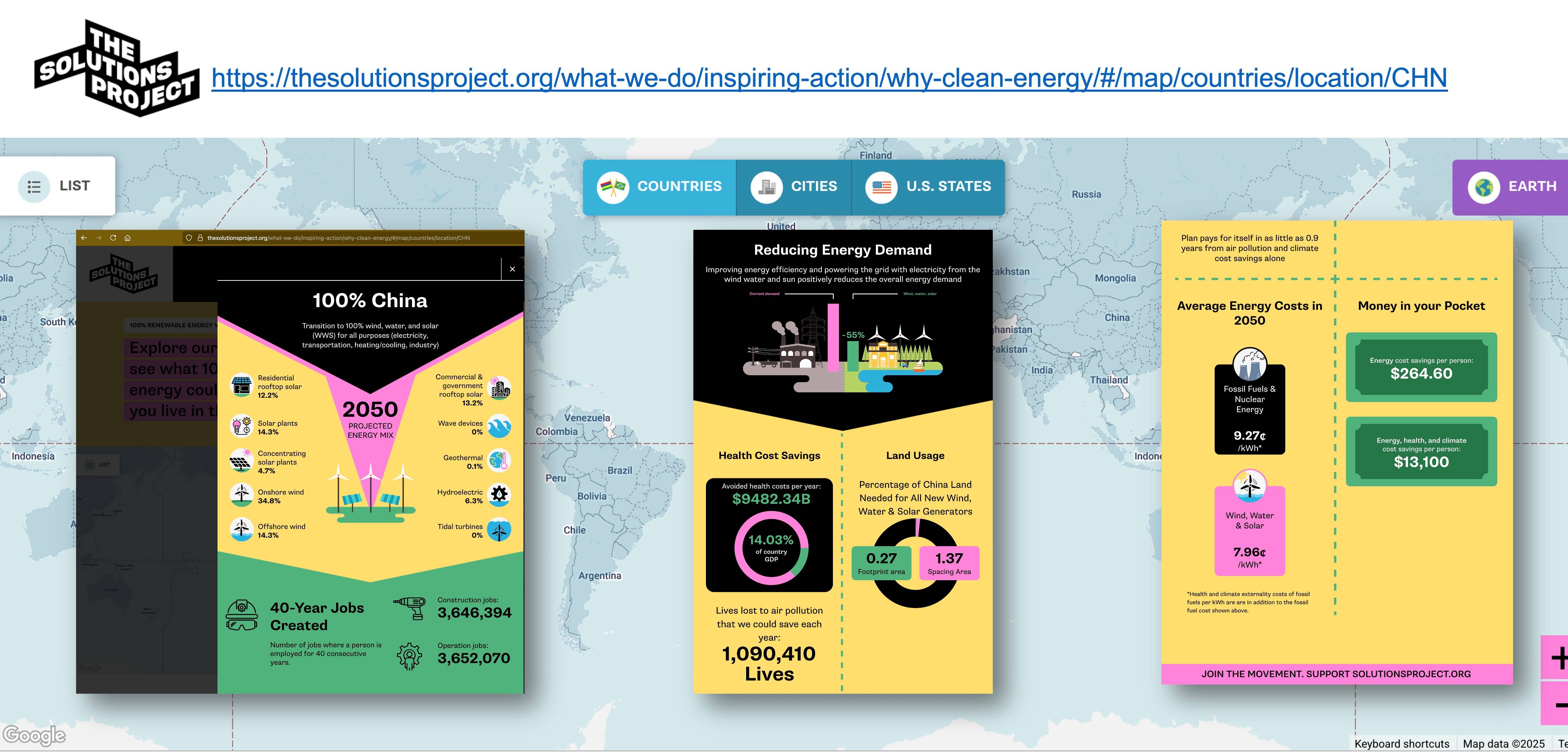
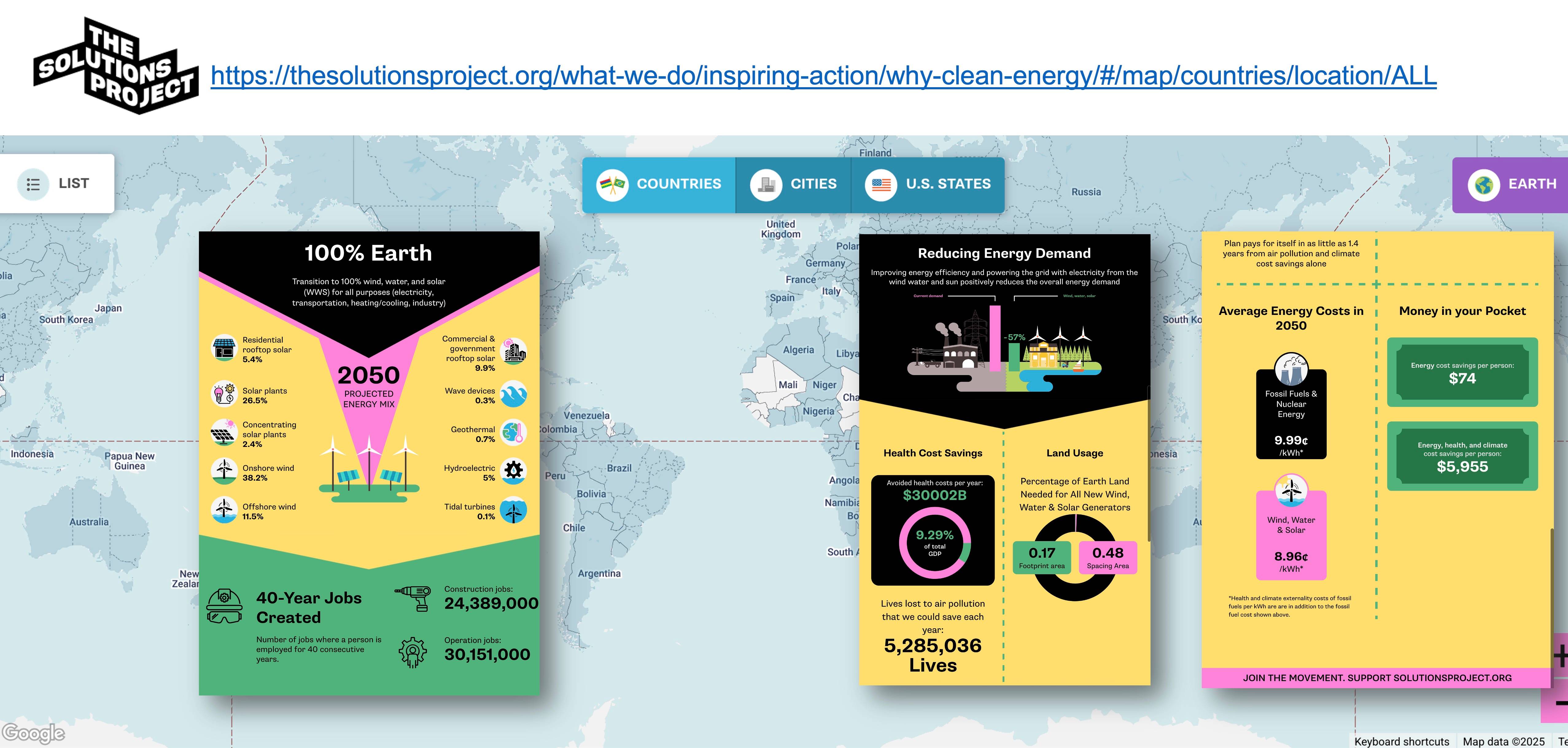
The data show how powerful that redirection could be. A full transition of China to 100 percent wind, water, and solar by 2050 would create more than seven million long-term jobs in construction and operations. It would save over one million lives every year from air-pollution deaths. It would avoid nearly ten trillion dollars in health costs annually. And it would deliver less costly power . . . with renewables costing less per kilowatt-hour than the combined fossil and nuclear system they replace. Every person in China would stand to gain many thousands of dollars a year in combined energy, health, and climate savings.
The climate crisis is the ultimate market failure. . . and the final exam of global decency.
The youth delegates who represented us in Brazil showed that the test of decency can indeed be passed. They returned with solutions, quiet gravity, and clarity of purpose. They brought back determination. Now the question is ours. . . will we meet their courage with our own and act with the same humility and ambition?
The sole USA representative at COP30, Senator Sheldon Whitehouse (Rhode Island – Democrat), returning from the climate talks in Brazil, described what he calls the “last lifeboat” . . . a serious price on carbon that finally reaches across borders, embodied today in the European Union’s Carbon Border Adjustment Mechanism. CBAM is not yet a full global carbon price, but it is a concrete beginning. It ensures that steel, cement, and other carbon-intensive imports pay a similar climate cost whether they are produced in Europe or abroad.
As I listened to Senator Whitehouse’s remarks on the Senate floor, I again felt the heartbreak of an earlier moment. During President Obama’s first two years, Democrats controlled the White House and held majorities in both the House and the Senate under Speaker Nancy Pelosi. The House passed a cap-and-trade bill: the American Clean Energy and Security Act. Yet the Senate never brought that legislation to a vote, and the United States failed to enact comprehensive climate law when it still had a governing trifecta. As Senator Whitehouse later detailed in his book “The Scheme: How the Right Wing Used Dark Money to Capture the Supreme Court” (PublicAffairs, 2023), captured institutions, dark money, and coordinated obstruction shaped that lost decade more profoundly than most citizens ever realised.

Now we need more than lifeboats. We need shipyards.
Not the false shipyards of geoengineering schemes, carbon-capture fantasies, or nuclear mega-projects that will devour decades we do not have. The only shipyards that matter now are the ones that rebuild life at scale. Renewable energy deployed with wartime coordination. Forests and Coral Reefs restored with the precision of supply chains. Oceans regenerated with the urgency of infrastructure. Permaculture elevated from garden philosophy to planetary engineering.

These shipyards are not machines for manipulating the sky. . . they are human cooperatives for restoring the living world.
The physics? Bluntly: this transition must be largely complete by 2035 to 2040 to maintain a livable climate.
The science is clear that this is not utopian. It is simply under-deployed.
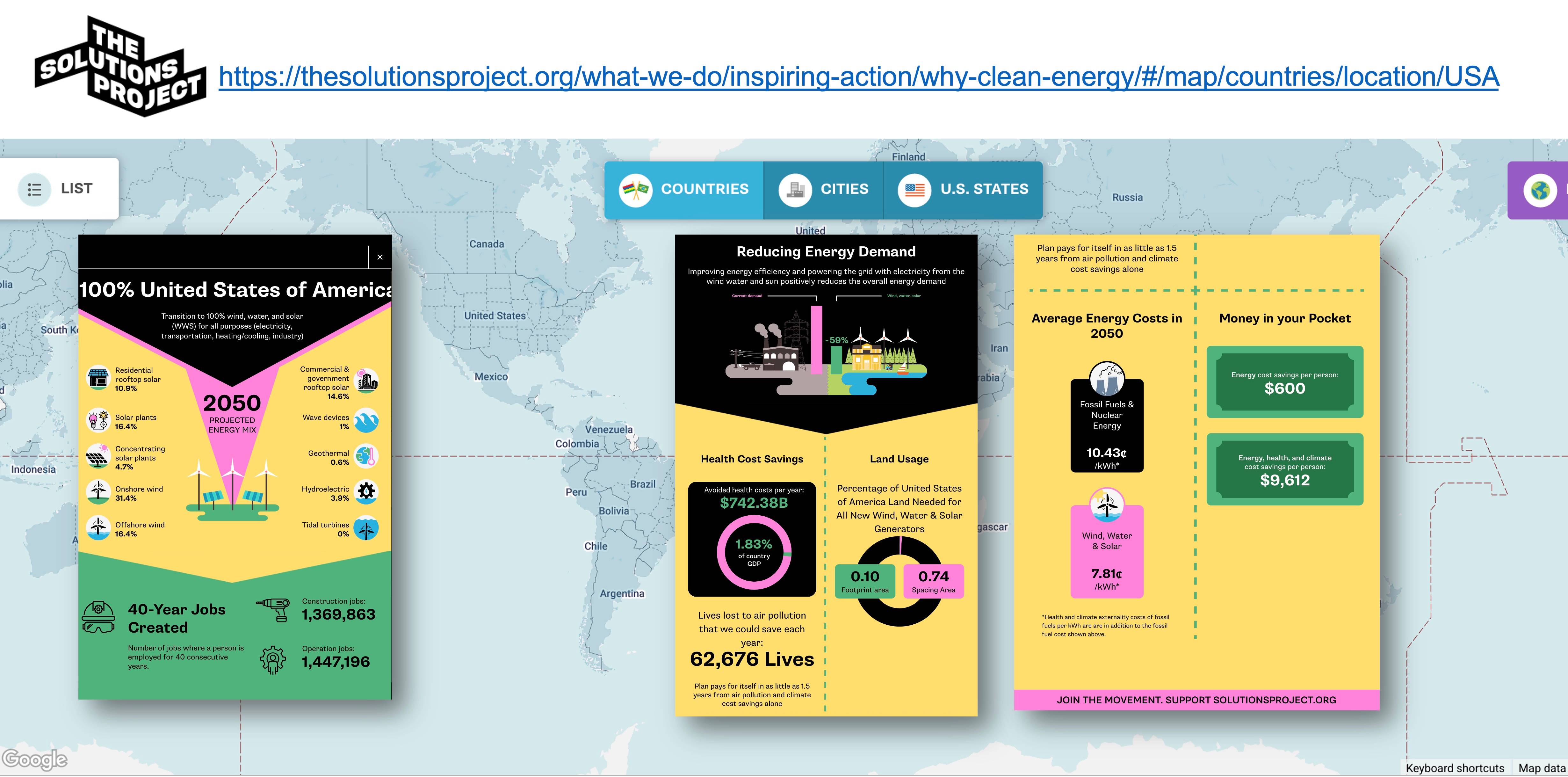
Take the United States: a transition to 100 percent wind, water, and solar by 2050 is estimated to create around 2.8 million long-term jobs. It would save more than sixty thousand American lives every year from air-pollution deaths. It would avoid more than seven hundred billion dollars per year in health costs. Renewable electricity would be cheaper than today’s mix of fossil fuels and nuclear power, and every person in the country would save hundreds of dollars a year on energy bills and roughly ten thousand dollars a year when health and climate damages are counted.
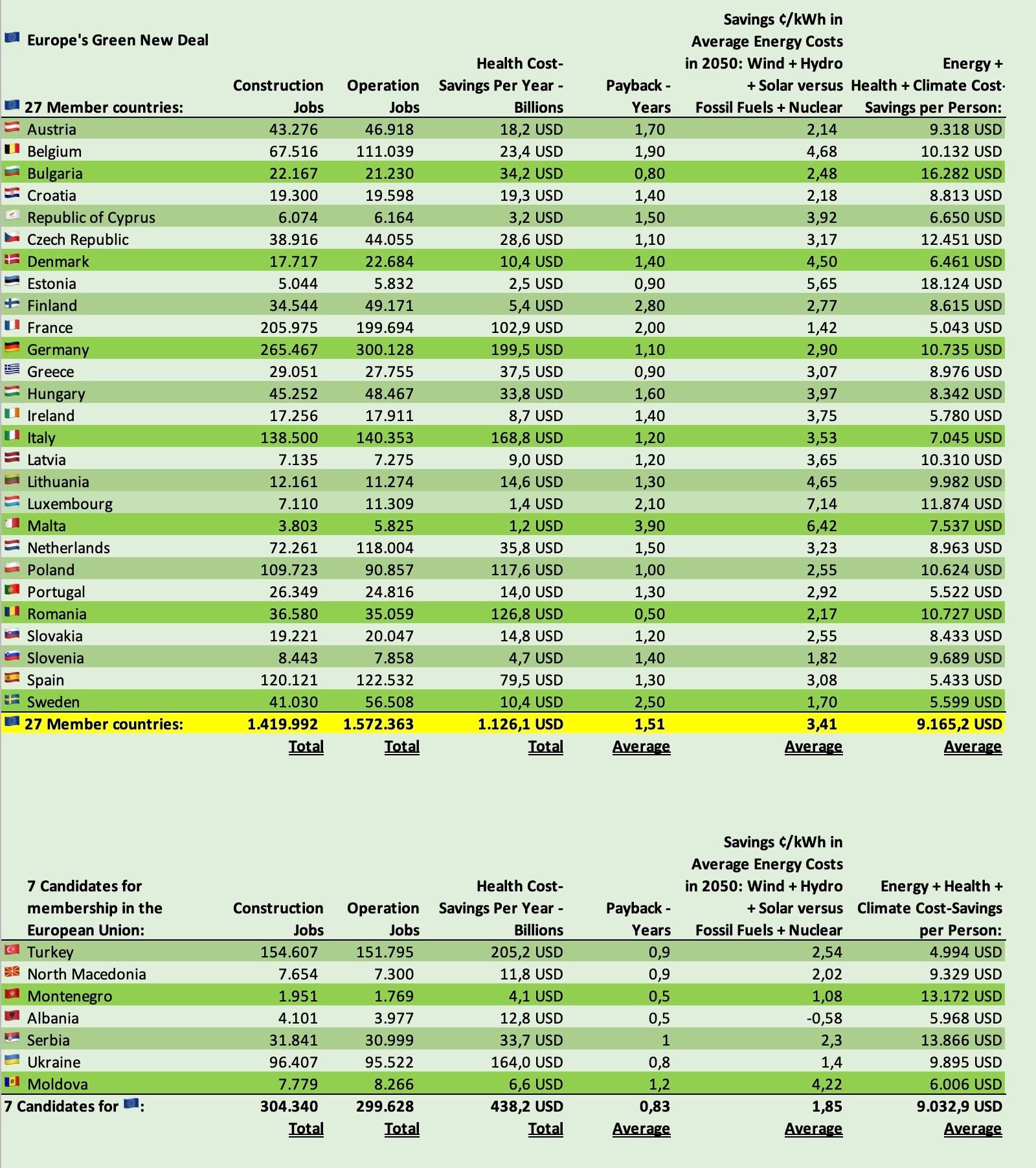
Europe’s picture is even more striking when we look at the whole European Union rather than country by country. I recently harvested the numbers for all twenty-seven EU member states from The Solutions Project and assembled them into a single table. Together, a 100 percent WWS transition across the Union would create more than 1.4 million long-term construction jobs plus nearly 1.6 million operations jobs. It would save more than 1.1 trillion dollars every year in health costs. On average, the payback time? One year-and-a-half. Wind, water, and solar would be more than three cents per kilowatt-hour cheaper than fossil fuels and nuclear. And when we combine energy, health, and climate benefits: on average, every person in the European Union would save more than nine thousand dollars a year.
These are not marginal gains. They are civilisation-scale upgrades. They describe a future in which the air is healthier to breathe . . . the power system is less costly, more efficient, more effective and more resilient . . . and millions of people find dignified work building and operating the clean infrastructure of a functioning planet.
We face polycrises. We need polysolutions. Solutions that match the scale, the speed, and the interconnectedness of the problems. We need decent consumers. Decent stores. We need decent supply chains, decent boardrooms, decent cities, decent budgets, and decent politics. We need institutions that behave like neighbours and neighbours who understand they are part of an institution called the planet.
These are the shipyards capable of restoring biocapacity at the speed that physics demands.
The original Marshall Plan was a strategic act of reconstruction after physical devastation. Today the devastation is planetary. The collapse is systemic. The rebuilding required is ecological.
The world now needs China. . . and most every country on Earth. . . to launch a Marshall Plan of our own. Interconnected Planetary Rescue in action. Not slogans. Not summits. Real deployments. Real timelines. Real scale.
Europe, with our dense democracies and accumulated wealth, has the opportunity to move first and move fast. The United States, with its financial markets and innovation culture, has the capacity to make capital serve survival instead of short-term extraction. China, with its unparalleled manufacturing base and accelerating renewable build-out, has the industrial muscle to turn gigawatts into terawatts and pilot projects into global practice.
None of this can be achieved by one nation alone. But the choreography requires leadership from nations with manufacturing scale, cooperation from nations with financial scale, and patience, wisdom, and courage from nations with ecological scale.
To my colleagues in finance and policy: this is the investment thesis of the millennium. The convergence point between fiduciary duty and planetary survival. The capital exists. The technology exists. The manufacturing capacity exists. The missing variable is moral courage.
To the youth delegates I was proud to see representing us in Brazil: you already understand this interdependence. You know the future is not built by one engine or one garden. . . but by partnerships rooted in solidarity and in the shared work of care.

The engines of the world must now become the gardeners of the planet. . . and if we choose wisely, this century may yet be remembered not for its crises, but for its moral courage, critical thinking and self-awareness in these critical hinge-moments in History.