The challenge is not a lack of knowledge. It is whether we will act, together and quickly enough, to match the scale . . . and scope of opportunities and our strengths. The last ten days of climate and energy reporting offer one clear truth: we are living in a decisive moment for the planet’s future. Each story . . . from Brazil’s Amazon delta to Europe’s overheated cities, farms, forests, mountains and waters . . . reflects the same tension between what we know must be done and what we continue to do instead.
1. Clean Energy’s Uneven March Forward
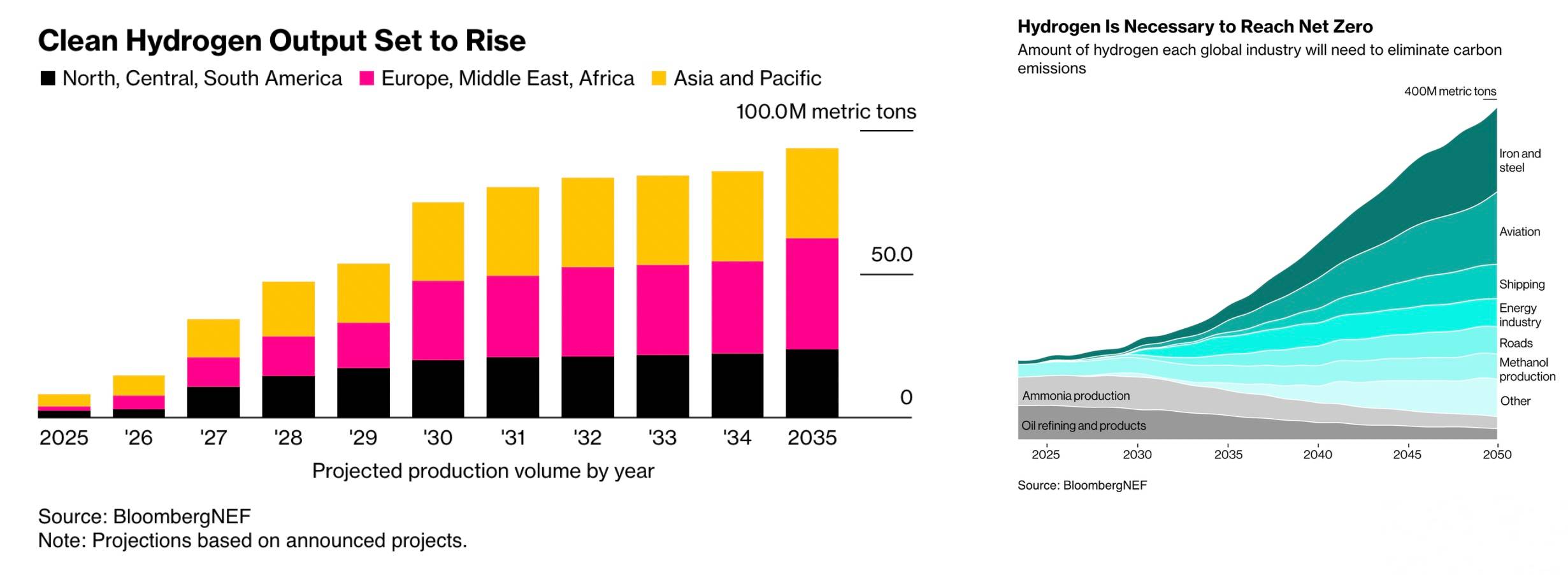
BloombergNEF’s projections show clean hydrogen output is set to grow significantly through 2035, with Asia-Pacific, Europe-Middle East-Africa, and the Americas all contributing. Yet the scale still falls far short of the 400 million metric tons annually that industry will require to decarbonize sectors like steel, aviation, and shipping. The gap is stark . . . even the most optimistic planned projects meet only a fraction of net zero demand. This is not a reason for despair, but for focus. As with other transitions . . . from the early days of solar PV to the rapid scaling of offshore wind . . . acceleration is possible when policy, finance, and innovation align. The next decade will determine whether hydrogen fulfills its potential or remains a marginal tool in climate action.
2. Europe’s Climate Frontline
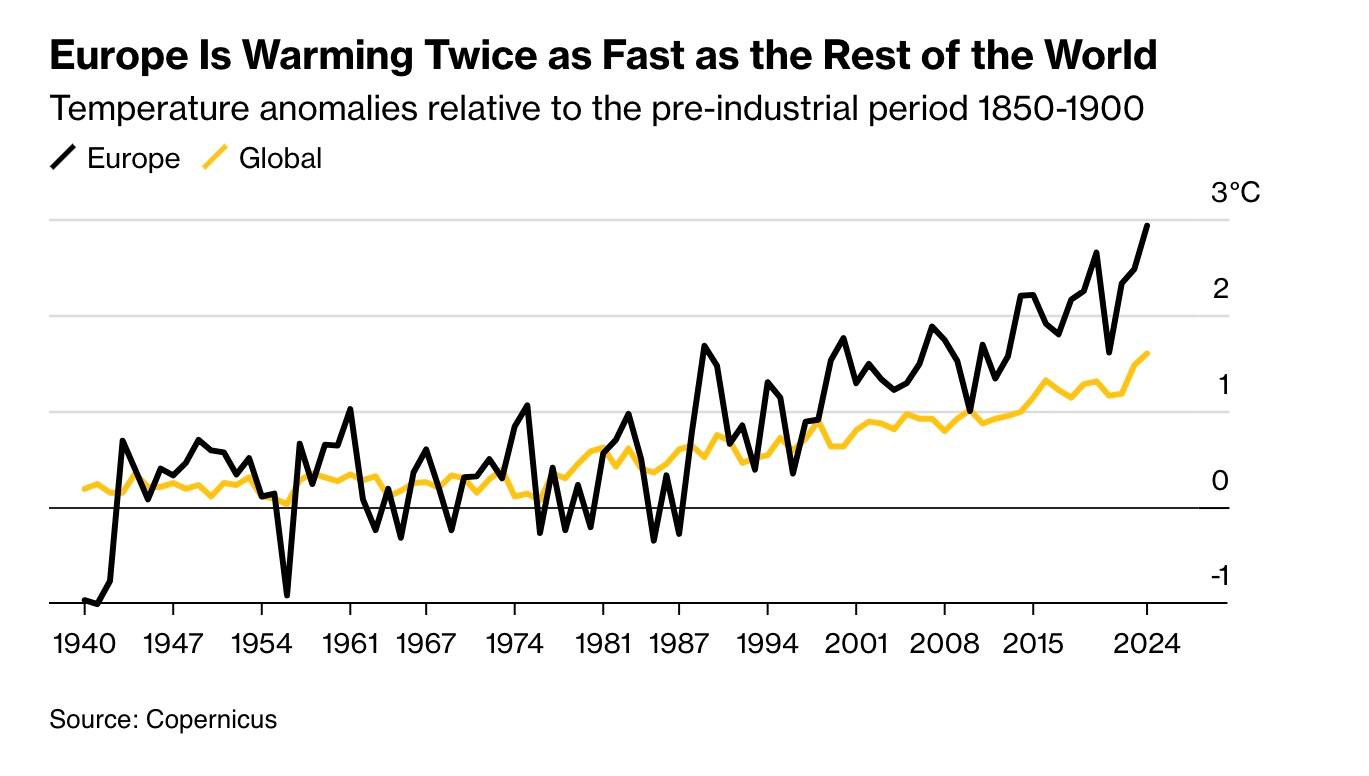
Data from Copernicus confirms Europe is warming twice as fast as the global average. For Paris, Berlin, and Brussels, this is no longer abstract. Cooling degree days have more than tripled in Paris over two decades; Berlin now shares Turin’s historic heat profile; Brussels feels like Croatia did 25 years ago. These changes are rewriting city life. Infrastructure, public health, and social equity are all under stress. The temptation to normalize such conditions must be resisted; adaptation is vital, but mitigation remains the ultimate safeguard.
3. Faith and Climate Leadership
In a moment when political leadership on climate is fragmented, Pope Leo XIV’s early actions . . . from introducing a “green” Mass to supporting the Vatican’s shift to solar . . . are a reminder that moral authority can bridge divides. The Catholic Church’s 1.4 billion members represent a global network for climate awareness and action. Leadership here is not just symbolic. Leadership speaks to the moral dimension of climate policy: safeguarding creation is a matter of justice, not just economics.
4. Markets, Finance, and Shifting Bets
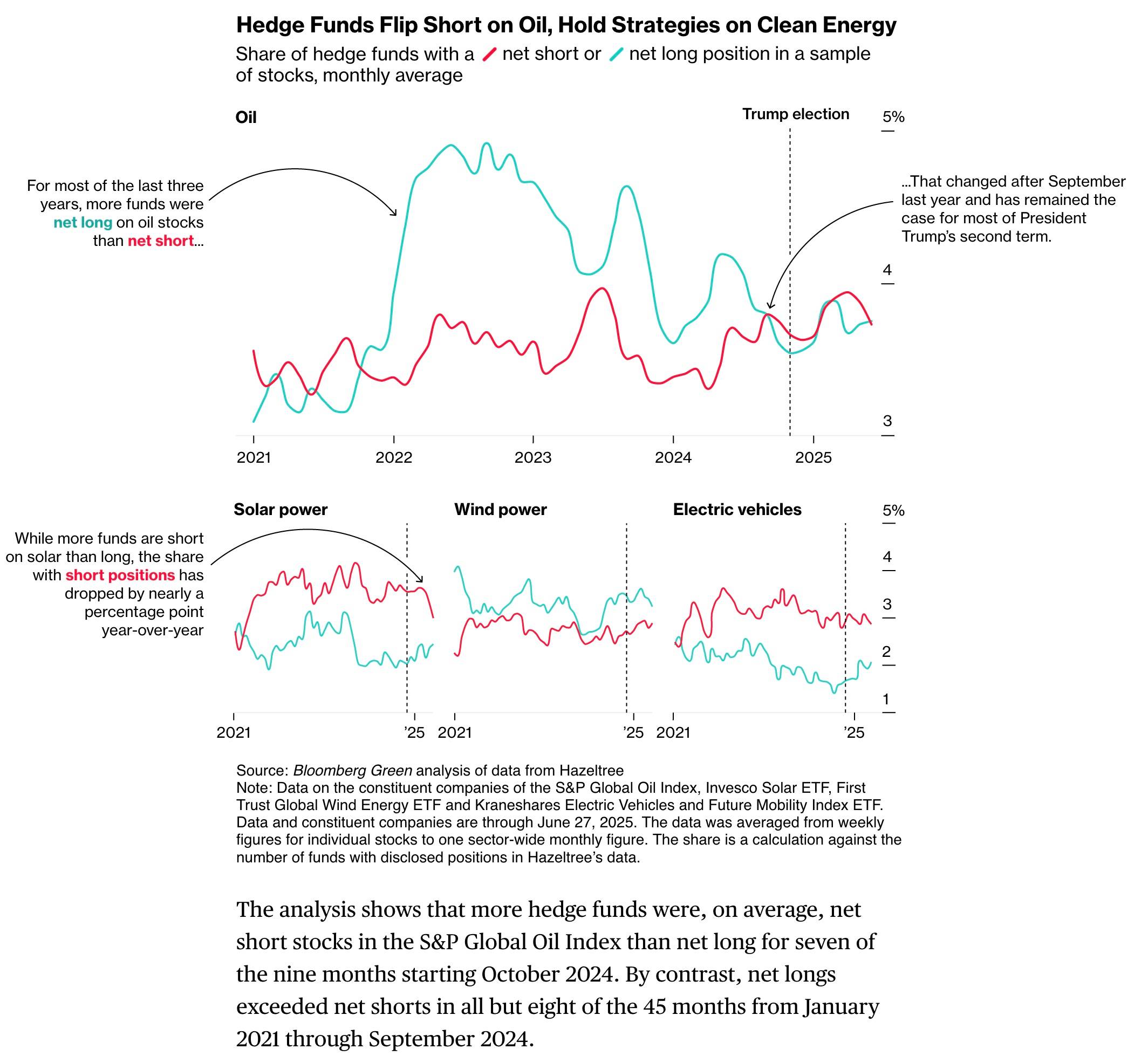
Bloomberg Green reports a reversal in hedge fund positions . . . shorting oil and easing shorts on solar, wind, and EVs. This is not yet a structural market shift, but it signals that some investors see fossil fuel risk rising and renewable prospects stabilizing. Meanwhile, Danske Bank’s decision to cut exposure to over 1,700 fossil fuel companies, and rising investments in grid-scale batteries, suggest a growing willingness in finance to align with transition pathways. Yet other forces pull the opposite way: Big Tech’s AI tools enabling oil and gas extraction, political rollbacks of green rules in the EU, and record new oil reserve searches by the largest energy majors.
5. Climate Impacts Without Borders
The period brought extremes on multiple continents:
- Heat and grid collapse in Iraq with temperatures over 50°C.
- Flash floods in Asia alongside lingering global average temperature rise of +1.25°C.
- Canadian wildfires sending smoke across North America.
- Mega-drying trends reducing freshwater reserves for three-quarters of the world’s population since 2002.
These are not isolated disasters; they are interlinked symptoms of the same systemic crisis.
6. Negotiations, Politics, and Public Trust
The UN plastics treaty talks highlight how obstruction can derail even widely supported goals. Brazil faces a contradiction between hosting the next major climate conference and advancing offshore oil drilling. In the US, the administration has escalated its attacks on wind and solar, cancelling projects and restricting development areas. This is why Trust . . . between governments, industries, and citizens . . . is as critical as technology in addressing climate change. Without credibility, even ambitious targets risk becoming empty promises.
In sum: The stories and data from these ten days reinforce that the gap between ambition and reality remains wide . . . but the direction of travel is still ours to choose.
At Youth4Planet, we see that leadership . . . whether from heads of state, financial institutions, or faith communities . . . can change the conversation and mobilize action. We know the scale of hydrogen, battery, and renewable expansion required. We understand the climate vulnerabilities that are already locked in, especially in regions like Europe.
For Financial Times’ Climate Capital news articles = visit: https://www.ft.com/climate-capital and for Bloomberg Green news articles = visit https://www.bloomberg.com/green. A few conversation-starting charts and news-photos:
#Brazil #UnitedNations #Europe #Heat #AssetManagers #CatastropheBonds #FlashFloods #DanskeBank #GlobalTempuratures #Grid #AI #Solar #Wildfire #ProxySeason #Orsted #Planet #TippingPoints #COP #Hydrogen #OilCompanies #Renewables #Volatility #Texas #CleanTechnology #LetterToTheEditor #Wind #Pollution #Plastic #Lancet #NASA #Copernicus #EUClimatePact #Youth4Planet