
Take a few minutes to read Financial Times’ Journalist Ian Johnston‘s article (#GiftLink https://giftarticle.ft.com/giftarticle/actions/redeem/44808d1c-c2fc-4513-bd74-02206d6d1343) and reflect: what does “ownership” of 3°Celsius of Global Warming mean for Luxembourg? . . . especially through the lens of Plurality-author by the renowned scholar and Taiwan Ambassador Audrey Tang.
Question: How are we pro-actively preparing . . . with all the tools in our toolboxes . . . for Climate Decency Infrastructure?
To help frame your lens for this exercise, keep in the back of your mind: 15 Youth-Plaintiffs in a lawsuit in Federal Court in Vancouver, Canada are arguing that their constitutional rights are violated by Canada’s continuing trajectory of Greenhouse Gas Emissions.
- Here is RTL Today’s news article “Accountability . . . Canadian youths ask court to impose binding climate protections“: https://today.rtl.lu/news/world/canadian-youth-seek-climate-action-in-landmark-trial-1258860189
- The plaintiffs’ lawyer, Catherine Boies Parker, told the court in her opening statement that the “plaintiffs are asking this court to hold Canada legally accountable for its role in continuing and worsening the climate crisis that is causing harm” https://www.cbc.ca/news/canada/british-columbia/youth-climate-trial-renewables-9.7401811.
To help you make the most of Ian Johnston’s FT article, I have separated the article into several parts . . . with 6-questions under each section:
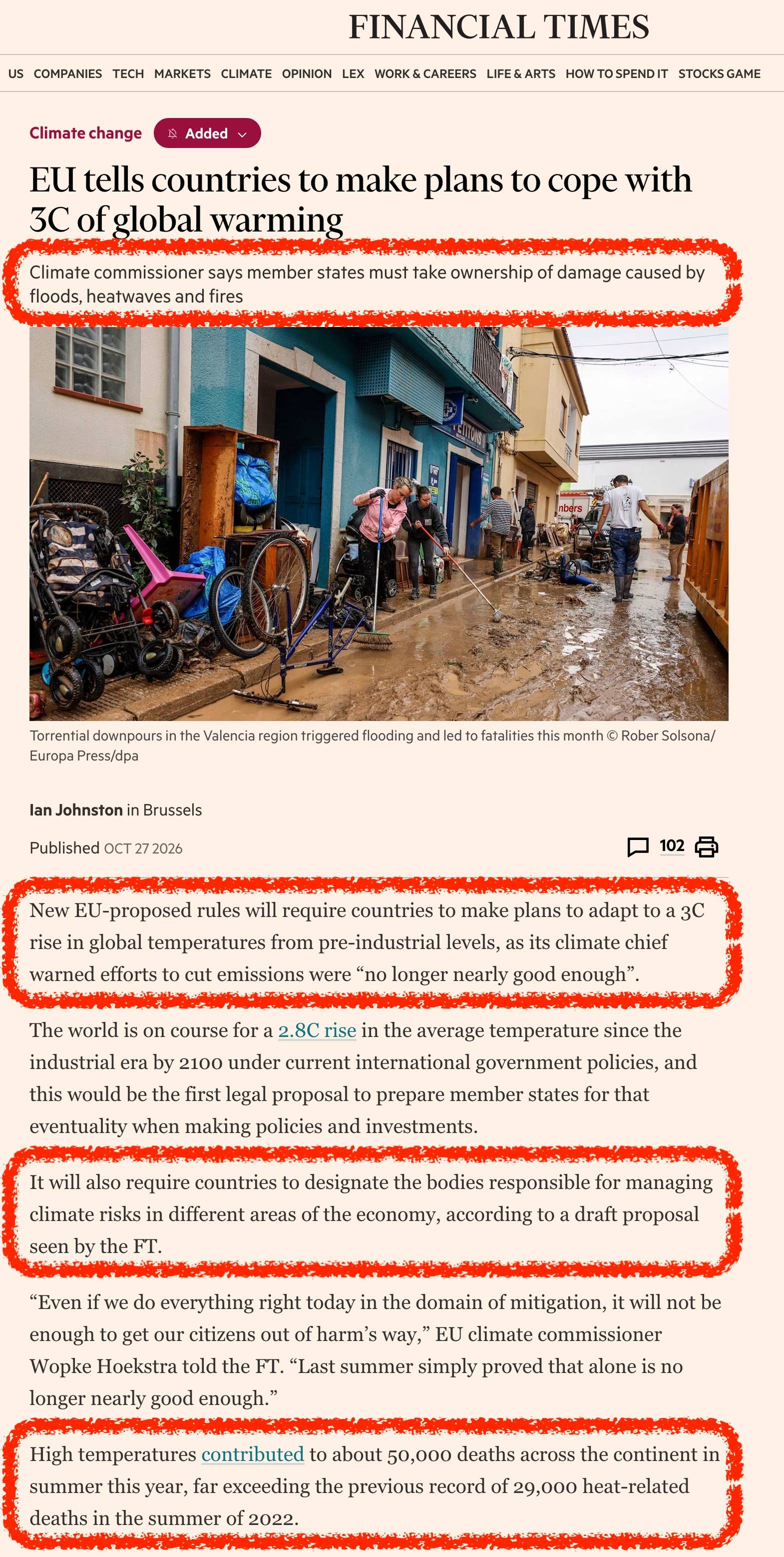
- On Ownership (First encircled section): The article says member states must “take ownership of damage caused by floods, heatwaves and fires.” Practically speaking, what does “ownership” look like for Luxembourg? How is it financial, infrastructural, and educational?
- On Planning for 3°C (Second encircled section): The EU is planning for a 3°C rise and current policies put us at 2.8°C trajectory. Europe is the fastest warming continent due to climate change and could see average temperatures rise up to 5°C by 2100, according to a draft document seen by Bloomberg News. How would you communicate what this means to Members of European Parliament, plus politicians at the Chambre des Députés & decision-makers elsewhere?
- On Designated Bodies (Third encircled section): The draft proposal requires countries to “designate the bodies responsible for managing climate risks.” In Luxembourg, how can the Youth Voice achieve & sustain representation within these bodies, with seats at the Board Rooms’ Tables?
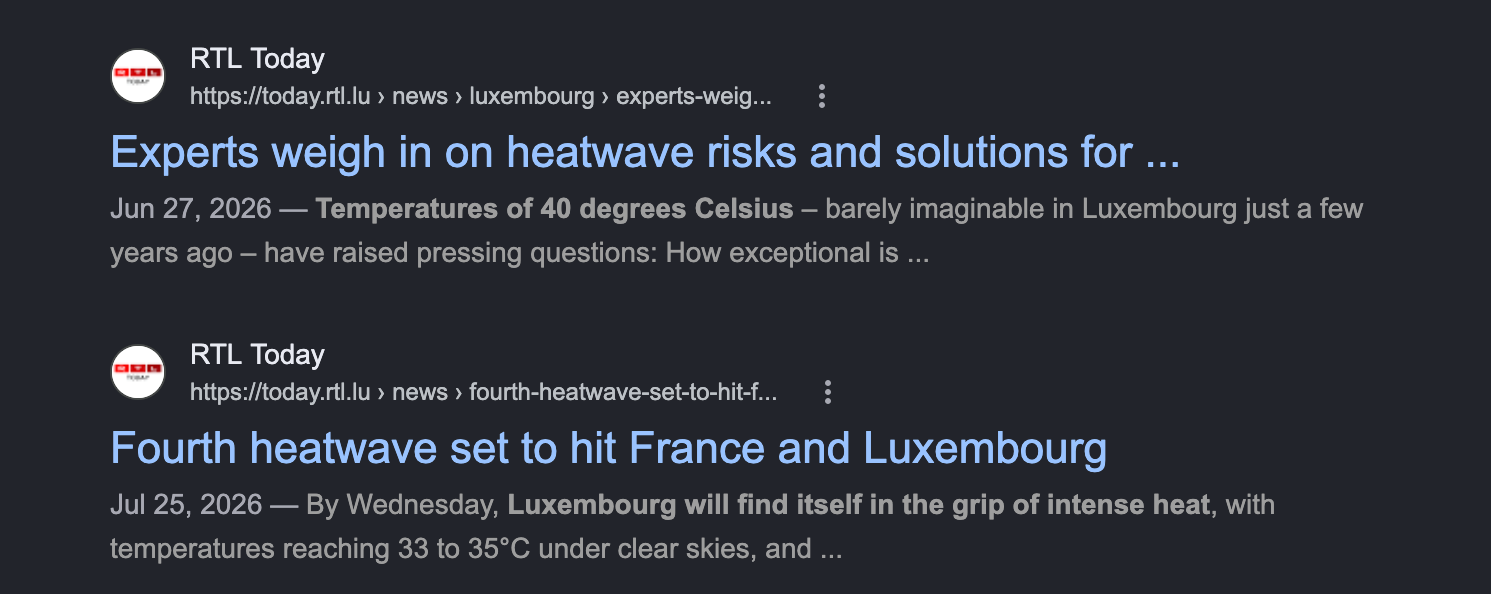
- On Public Health (Fourth encircled section): Given the shocking statistic that >50,000 people died from heat this year, how does Youth4Planet frame climate change as a critical public health and social justice issue?
- On the “Not Good Enough” Narrative: Wopke Hoekstra (the European Commission’s Climate Commissioner) states mitigation efforts are “no longer nearly good enough.” How does your organization balance pushing for aggressive mitigation (stopping the problem) while simultaneously teaching young people how to adapt to the reality of a hotter world?
- On Youth Agency: With the EU mandating national adaptation plans, what roles can Luxembourg’s youth incarnate in the public consultation process for these new rules? How can students move from “awareness” to “policy influence”?
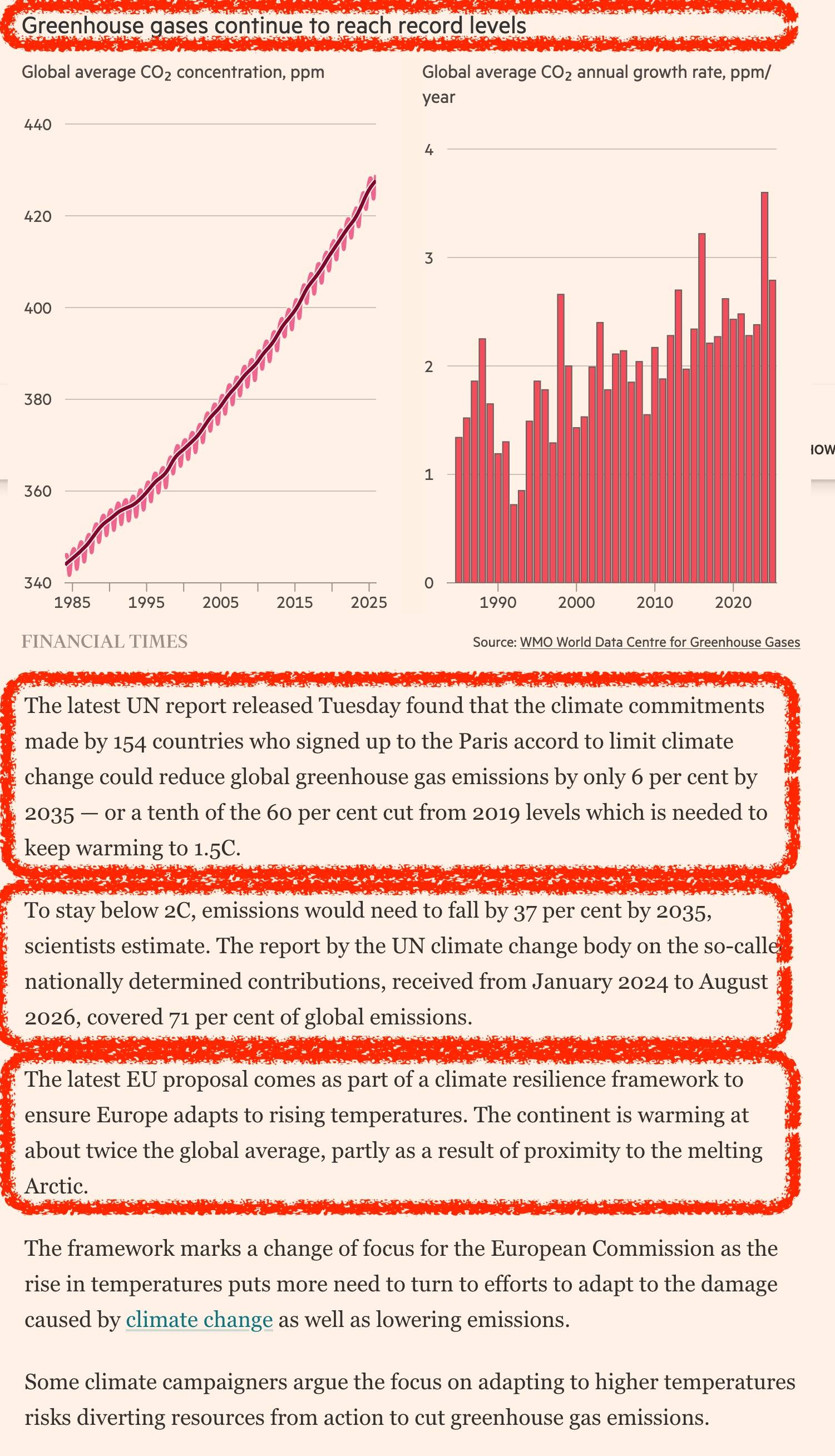
- On the 6% vs. 60% Gap (First encircled section): The UN report shows current Paris Agreement commitments will only cut emissions by 6% by 2035, while science demands 60%. How do Youth address this massive “ambition gap” with young people, working people and retired people? How do we hold leaders accountable when their promises are mathematically insufficient?
- On the 2°C Target (Second encircled section): The article states we need a 37% cut by 2035 just to stay below 2°C. Given that Luxembourg is a wealthy EU nation, what specific pressure can our youth delegates put on national policymakers to increase our Nationally Determined Contributions (NDCs) before the next deadline?
- On the “Twice as Fast” Reality (Third encircled section): The text notes Europe is warming at about twice the global average due to our proximity to the melting Arctic. How does this specific regional vulnerability change the messaging for Youth4Planet? Does framing it as an immediate European crisis resonate more with Luxembourg and European youth than framing it as a distant global issue?
- On the Adaptation vs. Mitigation Debate (Bottom text): The article mentions campaigners fear that focusing on “adaptation” (preparing for heat) will divert resources from “mitigation” (cutting emissions). As a youth organization, how do we balance advocating for green energy transitions while also demanding that governments protect citizens from the immediate damages of a warming continent?
- On the Data vs. The Narrative: The graph shows CO2 levels have risen relentlessly despite decades of climate summits. How do we combat cynicism among young people who look at this graph and feel that the international political system is simply not working?
- On Bridging the “Record Levels” Reality (Graph & First encircled section): The graph shows greenhouse gases hitting record levels, and the UN report confirms that current national pledges are drastically insufficient. For a youth organization like Youth4Planet, this creates a difficult narrative: we are asking young people to trust a political process that is currently failing its own targets. How do we frame this reality for students so they don’t lose hope in civic engagement, and what specific role do Luxembourg youth play in pushing our national leaders to submit much bolder climate commitments (NDCs) in this next cycle?
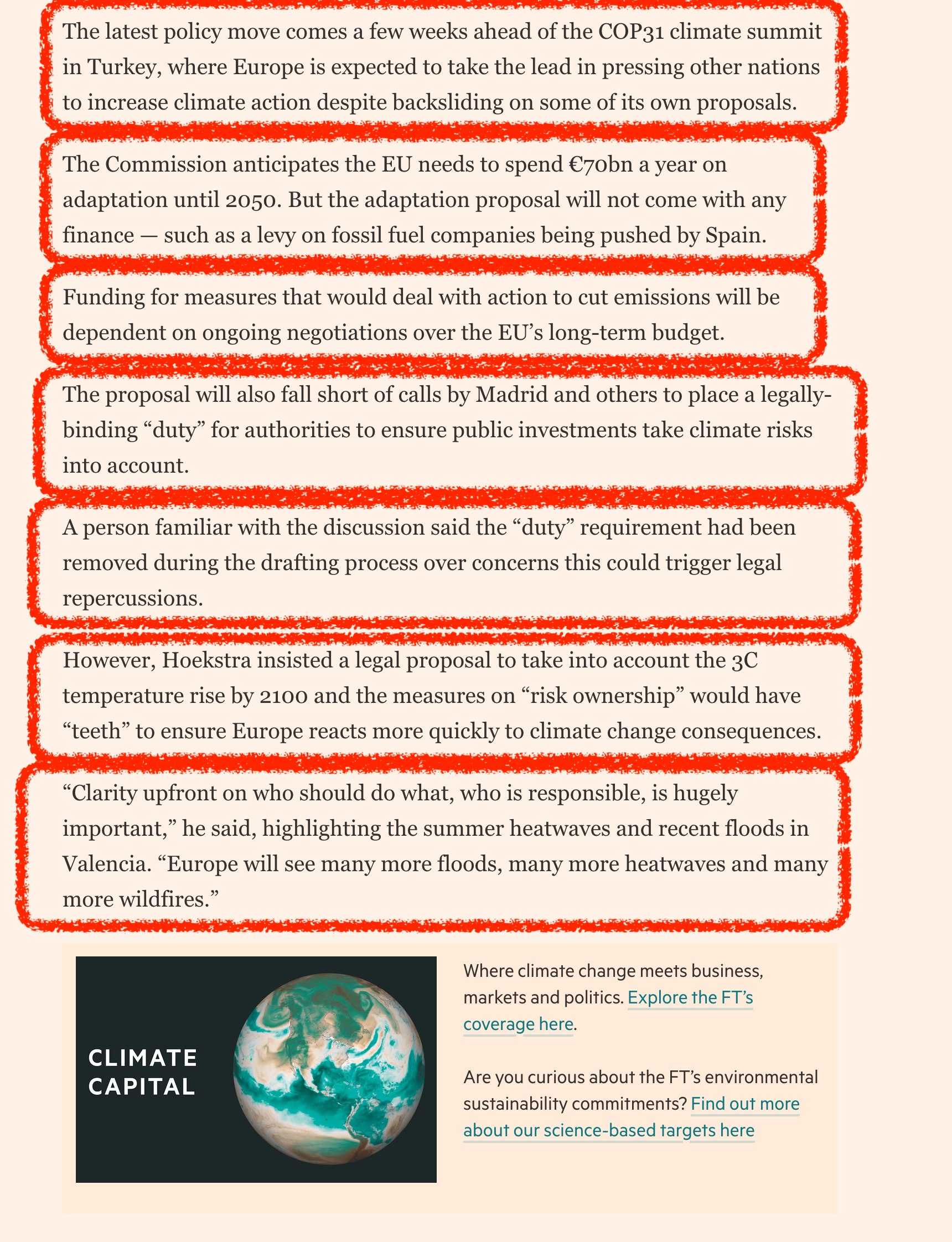
- On COP31 and Europe’s Leadership (First encircled section): The article notes Europe wants to press other nations to increase climate action at COP31, “despite backsliding on some of its own proposals.” How do we navigate hypocrisy when talking to young people? How do we teach youth to demand better from European leaders without losing faith in international diplomacy entirely?
- On the €70 Billion Price Tag (Second encircled section): The EU anticipates needing €70 Billion a year for adaptation but is not providing the financing yet . . . like the proposed fossil fuel levy. If young people are to inherit this financial burden, how should they be involved in the national debates about how to fund climate resilience? How can Luxembourg support EU-wide taxes on polluters?
- On the “Missing Teeth” of the Law (Fourth & Fifth encircled sections): The proposal dropped a legally binding “duty” for authorities to consider climate risks, allegedly due to fears of “legal repercussions” (lawsuits). How can we correctly react to this? How can we correctly react to this signal to youth that the law protects governments from accountability rather than protecting citizens from climate harm?
- On the “Teeth” vs. The Reality (Sixth encircled section): Commissioner Wopke Hoekstra insists the proposal will still have “teeth” to ensure rapid reactions. What do actual “teeth” look like to you? How can we make strict legally binding language? In parallel, how can we ensure financial accountability and public pressure to provide enough bite?
- On “Clarity Upfront” (Final encircled section): Hoekstra emphasizes “clarity upfront on who should do what, who is responsible.” For the youth of Luxembourg, what is the most confusing or opaque part of this current climate policy process that needs immediate clarity?
- On Preparing for the “Many More” (Final encircled section): The commissioner starkly warns of “many more floods, many more heatwaves, and many more wildfires.” How is we moving beyond just warning about this future, and instead training them to be the resilient local leaders who will overcome these crises at this history-hinge era?